 Maldives Compass
Everyday Life in the Maldives
See how these cultural traditions play out in the daily routines of island communities.
An island civilisation shaped by ocean crossroads, where South Asian, Arab, and African influences blend into something entirely its own.
The Maldives sits at the intersection of ancient maritime trade routes that connected the Arabian Peninsula, the Indian subcontinent, Southeast Asia, and the East African coast. For centuries, these ocean highways carried not just goods but ideas, languages, religions, and customs. The result is a culture that feels unmistakably Maldivian while carrying echoes of many distant shores.
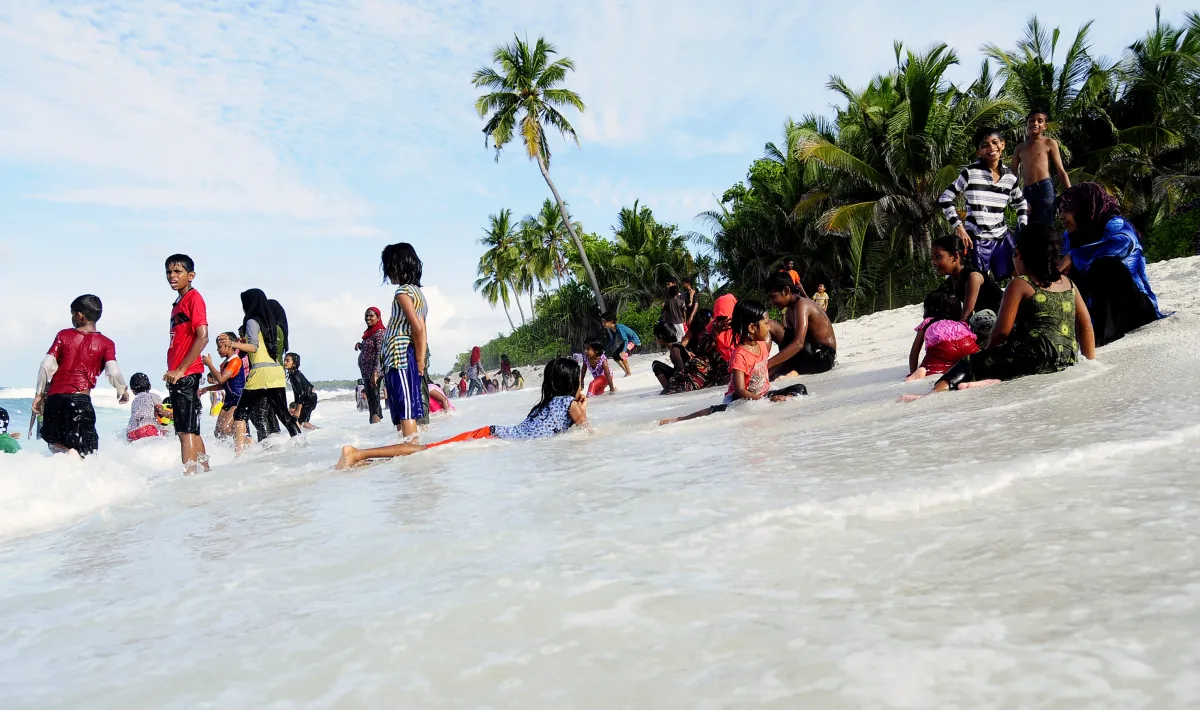
Unlike larger nations where regional differences can be vast, the Maldives has a remarkably cohesive national identity. Nearly all Maldivians share the same language, the same religion, and a deep connection to the ocean. Yet within that unity, there is a richness that rewards closer attention - subtle differences in dialect between northern and southern atolls, variations in local cuisine, and island-specific traditions that have survived for generations.
The strongest cultural thread connecting the Maldives to the wider world runs to South Asia, particularly Sri Lanka and southern India. The Dhivehi language belongs to the Indo-Aryan family and shares historical roots with Sinhalese. Many aspects of daily life - from food preparation methods to family structures - reflect South Asian patterns that have been adapted to island conditions over millennia.
The earliest settlers of the Maldives are believed to have come from the Indian subcontinent and Sri Lanka, bringing with them traditions of rice cultivation, coconut use, and a close relationship with the sea. Before the conversion to Islam in 1153 CE, the islands were home to Buddhist communities, and traces of this pre-Islamic past can still be found in archaeological sites across the archipelago.
The arrival of Islam in the 12th century transformed Maldivian culture profoundly and permanently. Arab traders had long visited the islands, and the conversion brought with it not only a new faith but new customs, an enriched vocabulary, and stronger connections to the Islamic world. The role of Islam in Maldivian life today is central - it shapes the calendar, the legal system, social norms, and daily routines.
Arab influence is visible in the Thaana script used to write Dhivehi, which incorporates Arabic numerals as its base characters and is written from right to left. Architectural elements in older mosques, the use of Arabic calligraphy, and certain culinary traditions also reflect this deep connection. Trade relationships with the Arab world historically centred on dried fish, cowrie shells, coir rope, and ambergris - goods the Maldives could offer in exchange for rice, textiles, and other necessities.
Less immediately obvious but no less real are the cultural threads connecting the Maldives to East Africa. The bodu beru drumming tradition, often considered the most iconic form of Maldivian music, bears strong resemblances to East African percussion traditions. Some historians believe this connection dates to the movement of people - both voluntary and forced - across the Indian Ocean during the medieval period.
Certain Maldivian words, musical rhythms, and dance forms suggest an African cultural layer that has been absorbed and transformed over centuries. This heritage is celebrated rather than hidden, and bodu beru performances remain a highlight of Maldivian cultural events.
What makes Maldivian culture distinctive is not any single influence but the way these diverse threads have been woven together in the unique context of small island life. Living on tiny coral islands surrounded by vast ocean creates a particular worldview - one that values community interdependence, resourcefulness, and respect for the natural environment.
Each island in the Maldives, no matter how small, traditionally functioned as a largely self-sufficient community. The island chief, the mosque imam, the skilled fishermen, and the women who processed fish and wove mats all played essential roles. This sense of community remains strong today, even as modernisation and migration to Malé and other urban centres reshape traditional patterns.
Visitors who take time to explore local islands will find that Maldivian culture is not a performance put on for tourists - it is the living fabric of daily life. Understanding and respecting that culture, including following local customs and dress expectations, is one of the most rewarding aspects of visiting the Maldives.