 Maldives Compass
Religion and Customs
Islam in Maldivian daily life.
From the coral stone masterpiece of the Hukuru Miskiy to the simple prayer halls on the smallest islands - mosques are the heart of every Maldivian community.
The Maldives is a 100 percent Muslim nation, and the mosque is the most important public building on every inhabited island. The five daily calls to prayer - broadcast from the mosque's speakers - structure the rhythm of island life, from the pre-dawn Fajr prayer to the evening Isha. On small islands, the mosque is typically the largest and best-maintained building, often the only one with air conditioning, and it serves as a community gathering point as well as a place of worship.
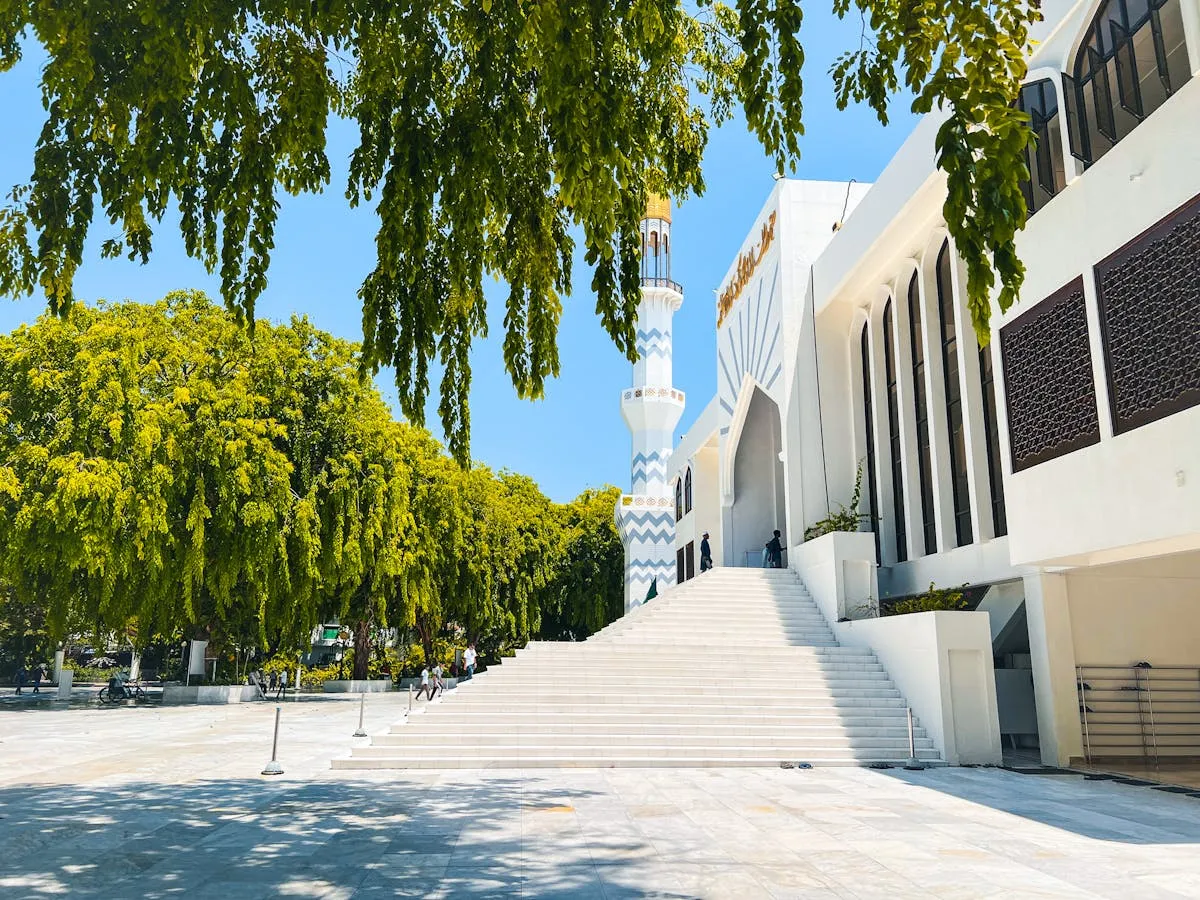
Every inhabited island has at least one mosque, and larger islands and towns have several. Male alone has over 30 mosques, ranging from historic coral stone structures to modern air-conditioned buildings. For visitors staying on local islands, the sound of the call to prayer becomes a familiar part of the daily soundtrack - a reminder that you are experiencing a living culture, not a resort simulation.
The Hukuru Miskiy in Male, built in 1658 during the reign of Sultan Ibrahim Iskandhar I, is the most important historic building in the Maldives. Constructed entirely from coral stone, it is a masterpiece of traditional Maldivian craftsmanship and the finest surviving example of coral stone architecture in the country.
The mosque's exterior walls are made of interlocking coral stone blocks, fitted together with notable precision. The interior features intricate carvings - geometric patterns, floral arabesques, and Quranic verses in Arabic calligraphy - all carved directly into the coral stone walls. The wooden interior includes lacquered panels produced using the traditional liyelaa jehun technique, adding rich colour to the space.
Adjacent to the mosque is a cemetery containing tombstones with beautifully carved coral stone headstones. The rounded tops indicate female burials, while pointed tops mark male graves - a distinction unique to Maldivian tradition. A striking white minaret, built in the 17th century, stands nearby.
The Hukuru Miskiy is on the UNESCO Tentative List for World Heritage status and is one of the most visited cultural sites in Male. Non-Muslim visitors can view the exterior and cemetery freely, and guided tours of the interior are sometimes available - ask at the mosque or arrange through a local guide.
The Grand Friday Mosque, part of the Islamic Centre in Male, is the largest mosque in the Maldives and one of the most recognisable buildings in the country. Completed in 1984 with funding from the Gulf states, its golden dome dominates the Male skyline and is visible from the sea. The mosque can accommodate up to 5,000 worshippers and features a large prayer hall, a library, and conference facilities.
The contrast between the Grand Friday Mosque and the Hukuru Miskiy - one modern and monumental, the other intimate and handcrafted - encapsulates the rapid transformation of the Maldives over the past few decades. Both are worth visiting when exploring Male.
Beyond Male, several islands preserve historic mosques built from coral stone in styles that reflect centuries of Maldivian architectural tradition. These mosques are typically small - designed for island communities of a few hundred people - with thick coral walls, wooden interiors, and thatched or corrugated iron roofs that have replaced the original coral tile roofing.
Notable historic mosques include:
These mosques are not tourist attractions in any conventional sense - they are working places of worship in small island communities. Visitors who wish to see them should ask permission locally, dress modestly, and visit outside prayer times.
Most mosques built in the Maldives today are modern concrete structures, often funded by a combination of government support, community donations, and international Islamic organisations. They are typically simple in design: a rectangular prayer hall with a mihrab (niche indicating the direction of Mecca), a minaret with speakers for the call to prayer, and an ablution area with water taps for ritual washing before prayers.
Despite their modest architecture, these mosques remain central to island life. They are where the community gathers for Friday prayers, where children attend Quran classes, and where important announcements are made. On small islands, the imam is one of the most respected figures in the community.
Mosques in the Maldives are active places of worship, and visitors should approach them with respect. Some guidelines: