 Maldives Compass
Mas Huni
Mas huni is the iconic Maldivian breakfast - shredded smoked tuna mixed with fresh coconut, onion, and chili, served with roshi flatbread. Learn how it is made and why it matters.
The thin, warm flatbread that accompanies almost every Maldivian meal - simple to make, essential to the cuisine, and the perfect vehicle for curries, fish paste, and mas huni.
Roshi is the everyday flatbread of the Maldives - a thin, unleavened bread made from wheat flour, water, and a little oil or ghee, cooked on a flat iron griddle called a thava. It is the Maldivian equivalent of the Indian roti or chapati, and like its South Asian cousins, it is a staple that appears at virtually every meal.
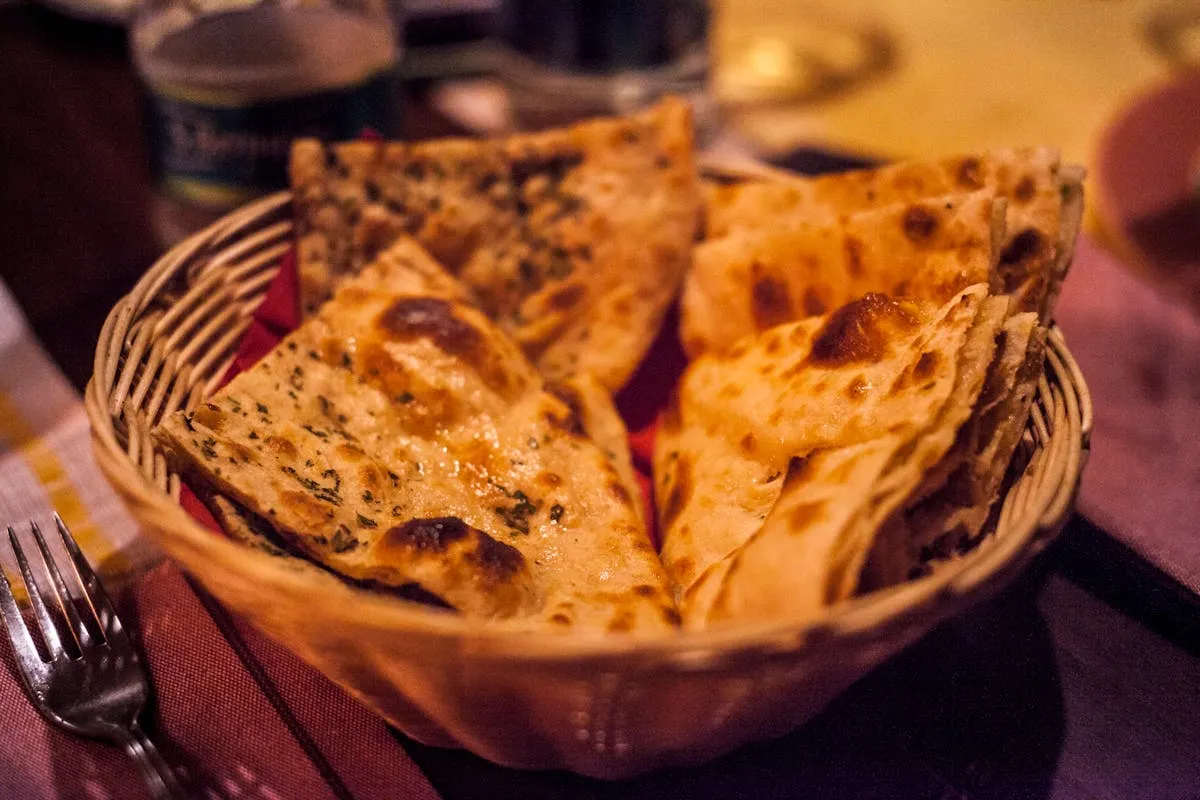
The bread itself is simple - just a few ingredients shaped into a ball, rolled out thin, and cooked on a hot, dry surface until lightly blistered and pliable. But its simplicity is exactly the point. Roshi is designed to be torn by hand and used to scoop, wrap, and carry other foods to your mouth. It is the edible utensil of Maldivian dining.
Making roshi is a daily ritual in Maldivian households, and the technique is passed from mother to daughter over generations. The process is straightforward but requires practice to get right:
Good roshi should be soft and flexible enough to fold and tear without cracking, but with a slight chewiness that gives it substance. It is best eaten fresh and warm, straight off the griddle.
While plain roshi is by far the most common, several variations exist:
Roshi appears at every meal of the day, each time playing a slightly different role:
Rice is the other main carbohydrate in Maldivian cooking, and many dishes can be eaten with either rice or roshi. But certain combinations - mas huni with roshi, garudhiya with rice and roshi on the side - are so traditional that substituting one for the other would feel wrong to most Maldivians.
The word "roshi" is clearly related to the Sinhalese "roti" and the Hindi "roti," and the bread itself belongs to a family of unleavened flatbreads that stretches across South Asia. The technique of cooking on a flat griddle, the use of wheat flour, and the tradition of eating by hand are all shared traits.
What makes Maldivian roshi distinctive is primarily what it is eaten with. Where Indian roti accompanies dal and vegetable curries, Maldivian roshi is almost always paired with fish - whether in the form of curries, clear broths, dried fish mixtures, or concentrated pastes. The bread itself may be similar, but the culinary context is entirely different.