 Maldives Compass
Local Islands
A closer look at community life, guesthouses, etiquette, and the best local islands for visitors.
Two very different ways to experience the same country - and you do not have to choose just one.
For decades, the Maldives offered visitors only one option: stay at a resort on a private island. Tourists and locals were kept almost entirely separate. That changed in 2009, when the government allowed guesthouses to open on inhabited islands, creating a second tourism track that has grown rapidly since.
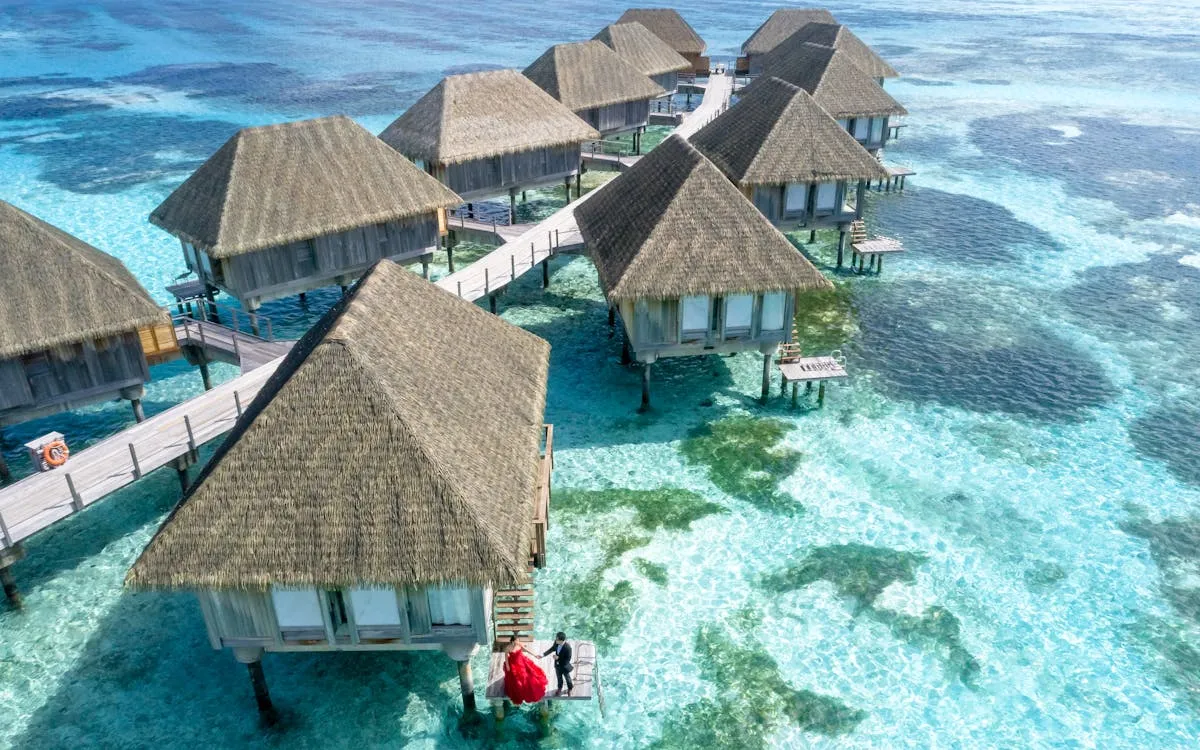
Today, the choice between a resort island and a local island is the single biggest decision you will make when planning a Maldives trip. Each offers a genuinely different experience, and understanding the differences will help you spend your time and money in the way that suits you best.
A resort island in the Maldives is exactly what it sounds like - an entire island occupied by a single resort. There are no local residents, no other hotels, and usually no public access. You share the island only with other guests and staff. Most resorts have their own house reef for snorkelling, multiple restaurants, a spa, and a range of water sports and excursions.
The experience is designed around exclusivity, convenience, and easy luxury. Everything is managed for you, from airport transfers by speedboat or seaplane to meal plans and activities. You can spend your entire stay without leaving the island, and many guests do exactly that.
The trade-off is cost. Even mid-range resorts in the Maldives are expensive by global standards. A week at a resort typically starts around $2,000 to $3,000 per person and can easily reach $10,000 or more at the higher end. Meals, drinks, and excursions are often charged separately, and resort pricing for food and activities tends to be steep.
A local island is an inhabited Maldivian island with a permanent community - homes, mosques, schools, shops, and harbours. Since 2009, many local islands have developed a guesthouse tourism industry, offering small, privately run hotels that range from basic rooms to comfortable boutique properties.
Staying on a local island gives you something a resort cannot: a sense of place. You will walk streets where Maldivians live and work, eat at local cafes alongside residents, and get a feel for the culture and daily rhythms of island life. Guesthouse owners and staff are often from the island itself, and many go out of their way to help guests explore the area.
Local islands are dramatically cheaper than resorts. A guesthouse room typically costs $50 to $150 per night, meals at local restaurants run $5 to $15, and excursions such as snorkelling trips or sandbank visits are a fraction of resort prices. It is entirely possible to visit the Maldives on a backpacker budget if you stick to local islands.
Cost. Resort islands are premium-priced. Local islands can cost a tenth as much for a comparable number of days.
Alcohol. Resorts serve alcohol freely. Local islands do not - the Maldives is a Muslim country, and alcohol is not permitted on inhabited islands. Some local islands arrange excursion boats where drinks are available offshore, but this is not the norm.
Beaches and swimwear. On resort islands, you can wear swimwear anywhere. On local islands, regular beaches require modest clothing. However, most tourist-oriented local islands have designated bikini beaches where swimwear is fine.
Food. Resorts offer international cuisine and extensive menus. Local islands offer Maldivian food and simpler international options at local cafes and guesthouse restaurants. The food on local islands is often more authentic and always more affordable.
Activities. Resorts package everything on-site - water sports, diving, spa treatments, sunset cruises. On local islands, you arrange excursions through your guesthouse or local operators. The activities themselves are often very similar (snorkelling, diving, dolphin watching), but the logistics are more hands-on.
Atmosphere. Resorts are curated, polished, and designed for relaxation and romance. Local islands are real communities - lively, a little rough around the edges, and full of character. Neither is better; they are simply different.
Resort islands tend to suit couples seeking a honeymoon or romantic getaway, travellers who want everything arranged and smooth, and anyone for whom budget is not a primary concern. If you want to switch off entirely and be looked after from arrival to departure, a resort delivers that beautifully.
Local islands tend to suit budget-conscious travellers, solo travellers, people who enjoy cultural immersion, and those who want to see the Maldives as a real country rather than just a luxury brand. If you are curious, adaptable, and happy to navigate a less polished experience, local islands are deeply rewarding.
Many visitors combine both. A popular approach is to spend a few days on a local island like Maafushi or Dhiffushi and then finish with a few nights at a resort - or vice versa. Island hopping makes it easy to mix and match.