 Maldives Compass
Why the Maldives Is a Big Game Fishing Destination
The Maldives sits in the middle of the Indian Ocean, surrounded by deep water that drops off steeply just beyond the atoll edges. This geography creates ideal conditions for pelagic fish - the large, fast-moving species that big game anglers dream about. Nutrient-rich currents sweep through the channels between atolls, attracting baitfish, which in turn draw predators like tuna, sailfish, and marlin close to the surface.
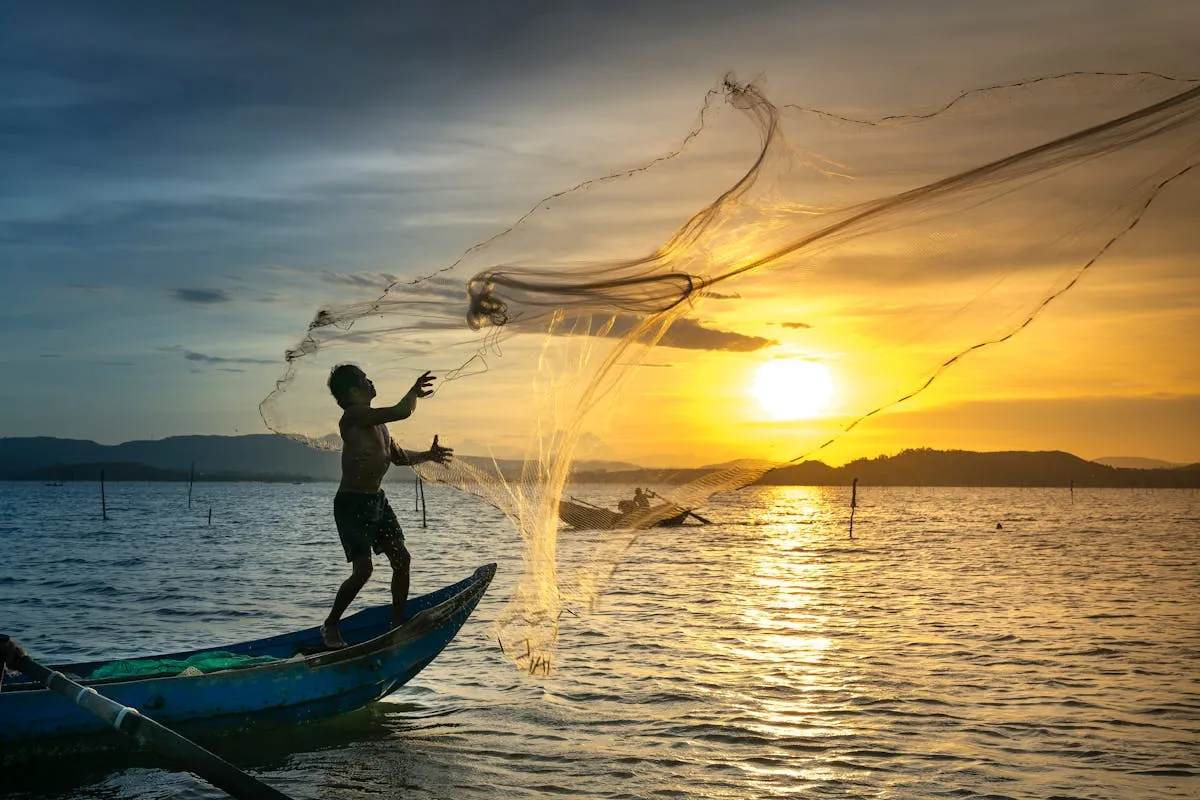
What makes the Maldives particularly special is that you do not need to travel far offshore to reach productive fishing grounds. The deep ocean is right there at the edge of the atoll, sometimes just a few miles from your island. This means shorter boat rides to the action and more time with lines in the water. Maldives delivers unusual encounters with powerful fish in a striking setting.
Target Species
Yellowfin tuna are the bread and butter of Maldivian big game fishing. These muscular fish are found year-round and can weigh anywhere from fifteen to over one hundred kilograms. Hooking a large yellowfin is a serious workout - they are fast, strong, and will test both your tackle and your stamina. Tuna are also excellent eating, and your catch can end up as sashimi or a grilled steak that evening. For more on how tuna features in local cuisine, see our page on tuna in Maldivian cuisine.
Sailfish are another prized catch. These spectacular fish are recognisable by their tall dorsal fins and speed - they are among the fastest fish in the ocean. Hooking a sailfish often results in dramatic aerial displays as they leap and tail-walk across the surface. Most operators practice catch and release with sailfish, allowing you to enjoy the fight and then watch the fish swim away healthy.
Wahoo are fast, aggressive, and make excellent table fare. Dorado, also known as mahi-mahi, are colourful, acrobatic fighters that are common in Maldivian waters. Blue marlin and black marlin are the ultimate prize - less frequently encountered but present in these waters, particularly during certain seasons. Giant trevally, barracuda, and various species of shark may also take your lure or bait.
Best Season for Big Game Fishing
Big game fishing in the Maldives is productive year-round, but the peak season runs roughly from November to April, coinciding with the northeast monsoon. During these months, seas tend to be calmer, visibility is better, and the fishing grounds on the eastern side of the atolls are most accessible. Sailfish and marlin are more commonly encountered during this period.
The southwest monsoon from May to October brings rougher seas on the eastern side but opens up the western channels, where different fishing opportunities arise. Yellowfin tuna are available throughout both seasons. Some experienced captains argue that the transitional months of April, May, October, and November can produce the best fishing of all, as currents shift and baitfish concentrate in predictable patterns.
What a Charter Includes
A big game fishing charter typically lasts between six and eight hours, though half-day options of four hours are also available. The boat is usually a purpose-built fishing vessel or a converted dhoni equipped with trolling outriggers, rod holders, a fighting chair, and proper safety equipment. The crew generally includes a captain, a mate, and sometimes a second mate.
All fishing equipment is provided - heavy-duty rods and reels, lures, live bait rigs, and terminal tackle. The crew handles the setup, rigging, and boat positioning. When a fish strikes, they will coach you through the fight, adjusting the drag, guiding you into the fighting chair if needed, and helping at the boat side when the fish is brought close. Drinks and snacks are usually included, and some charters provide a packed lunch for full-day trips.
Catch and Release vs Keep
Attitudes toward catch and release vary in the Maldives. For billfish like sailfish and marlin, catch and release is the widely accepted norm - these fish are more valuable alive in the ecosystem than on a plate. Reputable operators will handle billfish carefully, keeping them in the water as much as possible and releasing them quickly.
For tuna, wahoo, dorado, and other table fish, keeping your catch is perfectly reasonable and expected. The crew will clean and fillet the fish on the way back, and you can take it to your resort or guesthouse kitchen to be prepared for dinner. There is no better way to end a day on the water than sitting down to a meal of fish you caught that morning. For ideas on how it might be prepared, browse our Maldivian seafood guide.
Top Fishing Grounds
The deep channels between atolls are where the action is. The channels of North Malé Atoll, South Malé Atoll, and Ari Atoll are all well-known fishing grounds with easy access from popular resort and local island areas. Meemu Atoll and Vaavu Atoll are quieter but offer excellent fishing with fewer boats competing for the same water.
The outer reef edges, where the atoll shelf drops into deep blue ocean, are prime trolling territory. Captains look for current lines, floating debris, and bird activity as indicators of where baitfish - and therefore predators - are concentrated. Some of the best spots are closely guarded secrets, known only to captains who have spent years learning the waters.
Booking Through Resorts vs Independent Operators
Most resorts offer big game fishing as a bookable excursion, and this is the easiest option - the resort handles all the logistics, and you simply show up at the jetty. However, resort-arranged charters tend to carry a significant markup. If budget matters, it is worth looking into independent charter operators, some of whom are based on local islands and offer the same quality of boats and crew at lower prices.
Independent operators can be found through online fishing forums, social media, or by asking at guesthouses on local islands. Some of the best captains in the Maldives work independently and have years of experience with international anglers. The trade-off is that you may need to arrange your own transfer to the departure point. For a broader look at all fishing trips available, see our overview page.
Typical Costs
A half-day big game fishing charter costs between four hundred and eight hundred US dollars for the boat, depending on the size and quality of the vessel. Full-day charters range from seven hundred to fifteen hundred dollars. Resort-booked trips are generally at the higher end of these ranges. These prices are for the boat, not per person, so splitting the cost among a group of four to six anglers makes it much more manageable.
Some operators offer shared trips where individual anglers can join an existing charter at a per-person rate, typically one hundred fifty to three hundred dollars for a half day. If you are a solo traveller or a couple, this can be a more affordable way to get on the water. Compare this with the gentler option of sunset fishing, which offers a very different but equally enjoyable experience at a fraction of the cost.