 Maldives Compass
Why the Maldives Is a World-Class Diving Destination
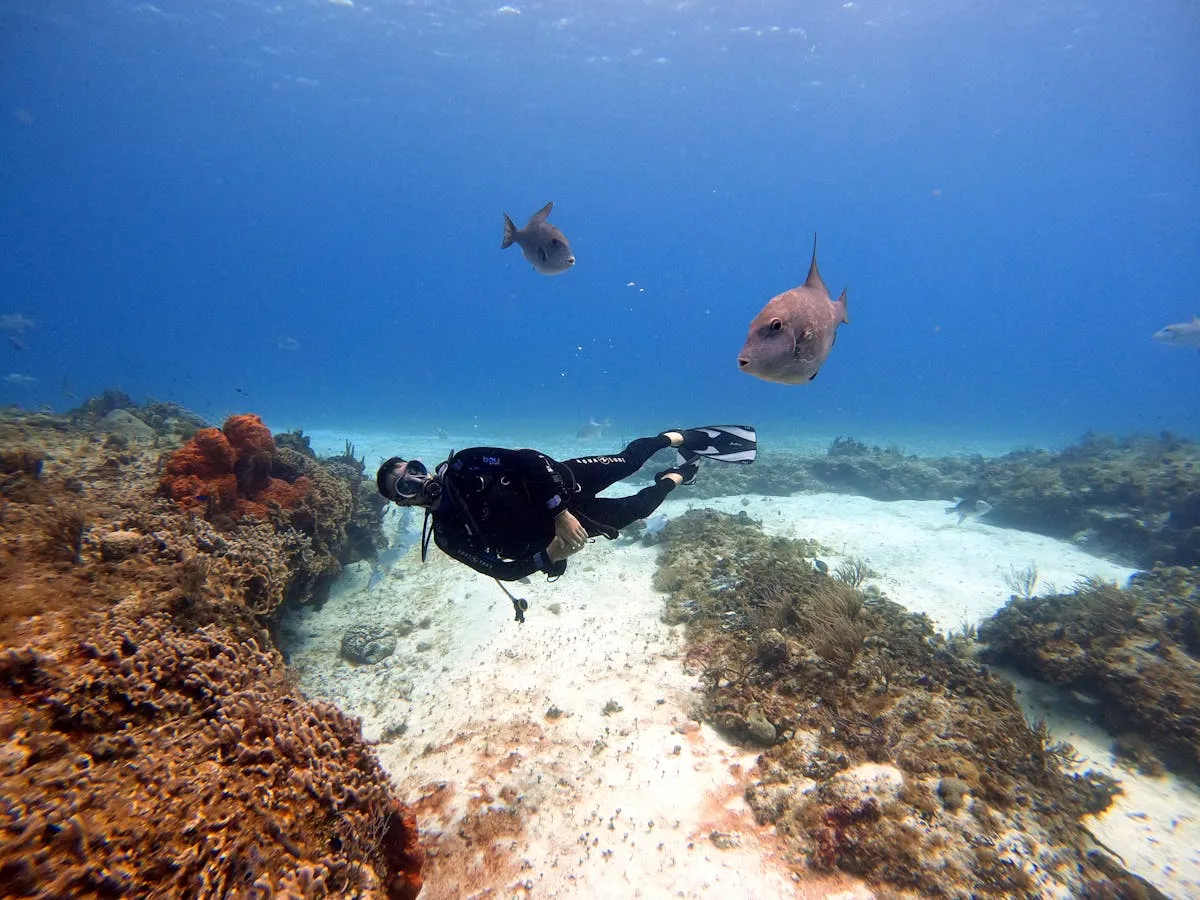
The Maldives consistently ranks among the top scuba diving destinations on the planet, and for good reason. With over 1,000 coral islands spread across 26 atolls, the country offers an notable variety of underwater environments. Warm, clear waters with visibility often exceeding 30 metres, combined with nutrient-rich currents flowing through channels between atolls, create conditions that support density and diversity of marine life. Maldives has sites that will leave a lasting impression.
Maaya Thila - South Ari Atoll
Maaya Thila is widely regarded as one of the finest night dives in the world, though it is equally spectacular during daylight hours. This small, circular reef formation, known locally as a thila, rises from a depth of around 30 metres to within 6 metres of the surface. The reef is covered with soft corals in vivid purples, oranges, and reds, and the overhangs shelter whitetip reef sharks that rest during the day. At night, the reef transforms as nurse sharks emerge to hunt, moray eels prowl the coral, and lionfish hover in the torchlight. Schools of bigeye trevally and fusiliers circle the thila in mesmerising formations. Maaya Thila is accessible from many resorts and liveaboards operating in South Ari Atoll, making it one of the most popular dive sites in the country.
Fish Head (Mushimasmingili Thila) - North Ari Atoll
Fish Head earned its name for a straightforward reason: it is home to an almost unbelievable concentration of fish. This protected marine area features a thila with dramatic overhangs and caves, where grey reef sharks patrol the deeper sections in impressive numbers. Large Napoleon wrasse approach divers with curiosity, and enormous schools of bluefin trevally swirl around the reef. The site drops to around 40 metres on the outer edges, but the most spectacular action happens between 15 and 25 metres. Strong currents can occur here, so Fish Head is best suited for divers with some experience in drift diving. The Maldivian government designated Fish Head as a marine protected area, which has allowed fish populations to thrive.
Fotteyo Kandu - Vaavu Atoll
Fotteyo Kandu is a channel dive that many experienced divers consider the single best dive in the Maldives. The channel connects the inner atoll lagoon to the open ocean, and the walls on either side are decorated with some of the most spectacular soft coral growth found anywhere in the Indian Ocean. Overhangs draped in blue, yellow, and pink soft corals create an underwater cathedral effect. Grey reef sharks cruise the channel entrance, and eagle rays are frequently spotted gliding past in the blue water. Napoleon wrasse, giant trevally, and schools of barracuda are common sightings. The dive typically involves riding an incoming current into the channel, hooking onto the reef at certain points to watch the sharks, then drifting along the wall to enjoy the coral. Due to strong and sometimes unpredictable currents, Fotteyo Kandu is recommended for advanced divers.
HP Reef (Rainbow Reef) - North Male Atoll
HP Reef, also known as Rainbow Reef, sits within easy reach of the capital Male, making it one of the most accessible premium dive sites in the Maldives. The reef earned its rainbow nickname from the beautiful array of soft corals that blanket its overhangs and surfaces in every colour imaginable. The thila sits at a depth range of about 10 to 30 metres, and even snorkellers can appreciate parts of its beauty from above. Divers typically encounter bannerfish, oriental sweetlips, blue-striped snappers, and morays tucked into crevices. The relatively sheltered position within the atoll means currents are usually manageable, though they can pick up during moon phases. HP Reef is an excellent choice for divers of all levels and is frequently included on day-trip itineraries from Male.
Banana Reef - North Male Atoll
Banana Reef holds a special place in Maldivian diving history as one of the first dive sites ever explored in the country. Its curved shape, reminiscent of a banana when viewed from above, gives this reef its name. The topography features dramatic cliffs, caves, and overhangs that drop from about 5 metres to 30 metres. The hard coral formations here are particularly impressive, with large table corals and staghorn corals providing habitat for groupers, moray eels, and lionfish. Schools of bannerfish are a signature sight at Banana Reef, often numbering in the hundreds. The site is protected as a marine reserve, and decades of conservation have kept this reef in remarkably good condition. Strong currents can sweep through, making it advisable to dive with an experienced guide who knows the site well.
Manta Point - North Male Atoll and Baa Atoll
Several sites across the Maldives carry the name Manta Point, but the most renowned are located in North Male Atoll and Hanifaru Bay in Baa Atoll. These cleaning stations attract reef manta rays that visit regularly to have parasites removed by small cleaner wrasse. At the North Male site, divers descend to a shallow reef at around 10 to 12 metres and wait at a respectful distance while mantas glide in overhead, sometimes circling repeatedly over the cleaning station. During the southwest monsoon season from May to November, Hanifaru Bay in Baa Atoll becomes one of the largest known manta feeding aggregations in the world, with dozens of mantas feeding on concentrated plankton. Encounters with these gentle giants, which can have wingspans exceeding 4 metres, are among the most experiences in Maldivian waters.
Planning Your Dive Trip
The Maldives offers diving year-round, though conditions vary by season. The northeast monsoon from December to April generally brings calmer seas and better visibility on the eastern sides of the atolls. The southwest monsoon from May to November can produce stronger currents that attract large pelagic species, including whale sharks and manta rays. Liveaboard safaris are the best way to access remote dive sites across multiple atolls, while resort-based diving centres provide convenient access to nearby reefs. Most dive centres require at least an Open Water certification, and an Advanced Open Water certification opens up the majority of the best sites. For channel dives like Fotteyo Kandu, experience with drift diving and current management is essential. Whichever sites you choose, the underwater world of the Maldives delivers an experience that few other destinations can match.