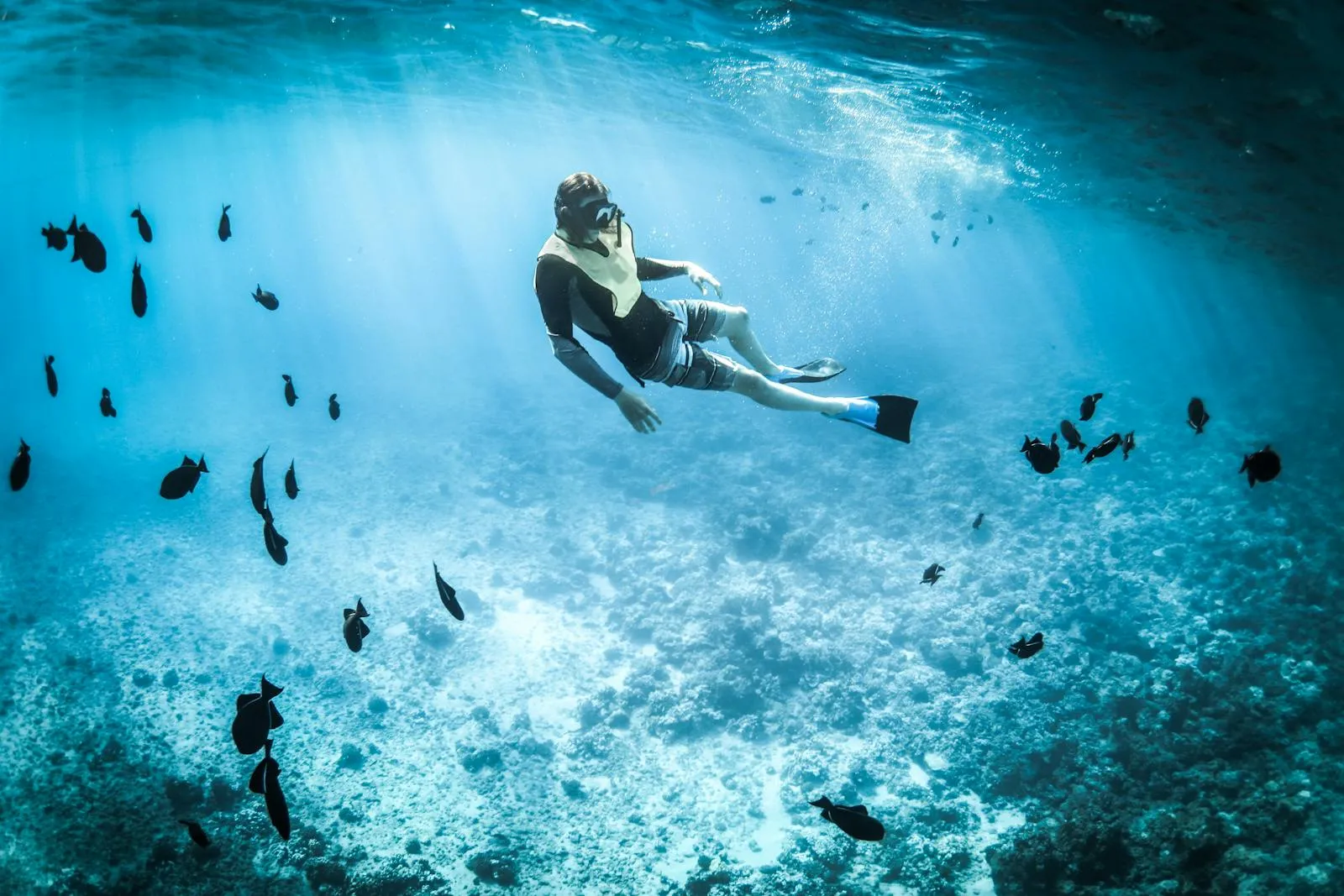
Slip into warm, crystal-clear water and discover a kaleidoscope of coral, tropical fish, sea turtles, and reef sharks just steps from the shore.
Why the Maldives Is a Snorkeler's Paradise
The Maldives is one of the easiest places in the world to enjoy snorkeling. Water temperatures hover between 27 and 30 degrees Celsius year-round, visibility regularly exceeds 20 metres, and many islands are surrounded by accessible house reefs that you can reach simply by wading in from the beach. You do not need to be a strong swimmer or have any prior experience to enjoy snorkeling here.
What sets the Maldives apart is the sheer abundance of marine life. Even a short session on a house reef can reveal butterflyfish, angelfish, and parrotfish drifting among healthy coral formations, green turtles grazing on seagrass, and blacktip reef sharks patrolling the reef edge. For those willing to venture further, guided snorkeling excursions visit sites where manta rays and whale sharks are regularly encountered.
Snorkeling in the Maldives requires no boat - many islands have house reefs just steps from shore
House Reefs: Snorkeling at Your Doorstep
A house reef is the fringing reef that encircles most Maldivian islands. It is, without exaggeration, the single most important feature to consider when choosing where to stay if snorkeling matters to you. A great house reef means you can snorkel whenever you like, as many times a day as you wish, at no extra cost.
The best house reefs have a shallow lagoon that gives way to a clearly defined reef edge, where the seabed drops from a few metres to 10 or 20 metres. This transition zone is where the action is. Coral coverage is densest here, and fish congregate along the drop-off. Look for resorts and guesthouses that specifically mention their house reef quality, and read recent guest reviews for up-to-date reports.
What You Will See
Maldivian reefs support an notable diversity of marine life. Here is what you can expect on a typical snorkeling session.
Coral gardens - Branching staghorn corals, massive brain corals, and colourful soft corals create an underwater landscape that changes with every metre.
Tropical fish - Clouds of blue-green chromis, territorial triggerfish, curious wrasses, and schools of snapper are everywhere. Clownfish nestled in anemones are a favourite sight.
Sea turtles - Green and hawksbill turtles are commonly seen on house reefs, often resting on coral heads or feeding in the shallows.
Reef sharks - Blacktip and whitetip reef sharks frequently cruise the reef edge. They are harmless to snorkelers and a thrill to watch.
Rays - Stingrays glide across sandy patches, and eagle rays sometimes pass along the outer reef.
Octopus and moray eels - Look carefully in crevices and under coral overhangs for these fascinating creatures.
Gear and Essentials
You do not need much to snorkel in the Maldives, but the right gear makes a big difference. See our detailed snorkel gear guide for in-depth advice on choosing and buying equipment.
Mask - A well-fitting mask is the single most important piece of equipment. If you can, bring your own. Rental masks are available everywhere but may not fit perfectly and can leak or fog.
Snorkel - A simple dry-top or semi-dry snorkel works well. Fancy models are not necessary.
Fins - Open-heel or full-foot fins both work. Fins make it much easier to cover distance and handle any current.
Rash guard or wetsuit top - The water is warm, but a lightweight rash guard protects against sunburn and minor jellyfish stings.
Reef-safe sunscreen - Essential. Standard sunscreens contain chemicals that damage coral. Choose mineral-based formulas with zinc oxide or titanium dioxide.
Underwater camera - Even an inexpensive waterproof camera or a phone in a waterproof housing will capture memories you will treasure.
Best Snorkeling Spots
While almost every island has a reef worth exploring, certain areas stand out.
Baa Atoll - A UNESCO Biosphere Reserve with outstanding coral health. Hanifaru Bay is famous for seasonal manta ray and whale shark gatherings.
South Ari Atoll - The go-to atoll for whale shark snorkeling, with encounters possible year-round. House reefs here are also excellent.
North Male Atoll - Close to the airport with well-established snorkeling sites and healthy reef systems.
Vaavu Atoll - Less visited, with healthy reefs and reliable nurse shark sightings at certain sites.
Rasdhoo Atoll - A small atoll with a thriving house reef and easy access to hammerhead shark sites for adventurous snorkelers.
Snorkeling Tips
Go early - Marine life is most active in the morning. The water is also calmer and visibility tends to be at its best.
Check the current - Ask staff about current conditions before entering the water. Snorkeling against a strong current is exhausting and can be dangerous.
Never touch coral - Coral is a living animal. A single touch can damage years of growth and introduce harmful bacteria.
Keep a safe distance from marine life - Enjoy watching from a respectful distance. Do not chase, touch, or ride any animal.
Use a flotation device if needed - There is no shame in wearing a life jacket. Many resorts provide them, and they let you relax and focus on the view.
Stay aware of boat traffic - Stick to designated snorkeling areas and be visible. A brightly coloured snorkel or rash guard helps.
 Maldives Compass