 Maldives Compass
Whale Sharks in the Maldives
Everything you need to know about whale sharks in the Maldives: South Ari Atoll encounters, best time to visit, responsible viewing guidelines, and conservation.
With wingspans reaching over five metres, manta rays are among the most graceful creatures in the ocean, and the Maldives is one of the best places on Earth to swim alongside them.
The Maldives hosts the world's largest known population of reef manta rays (Mobula alfredi), with thousands of individuals identified through photo-ID programmes. The country's unique atoll geography creates ideal conditions for mantas: nutrient-rich currents funnel plankton into concentrated feeding areas, while shallow reef formations provide cleaning stations where small fish remove parasites from the mantas' skin.
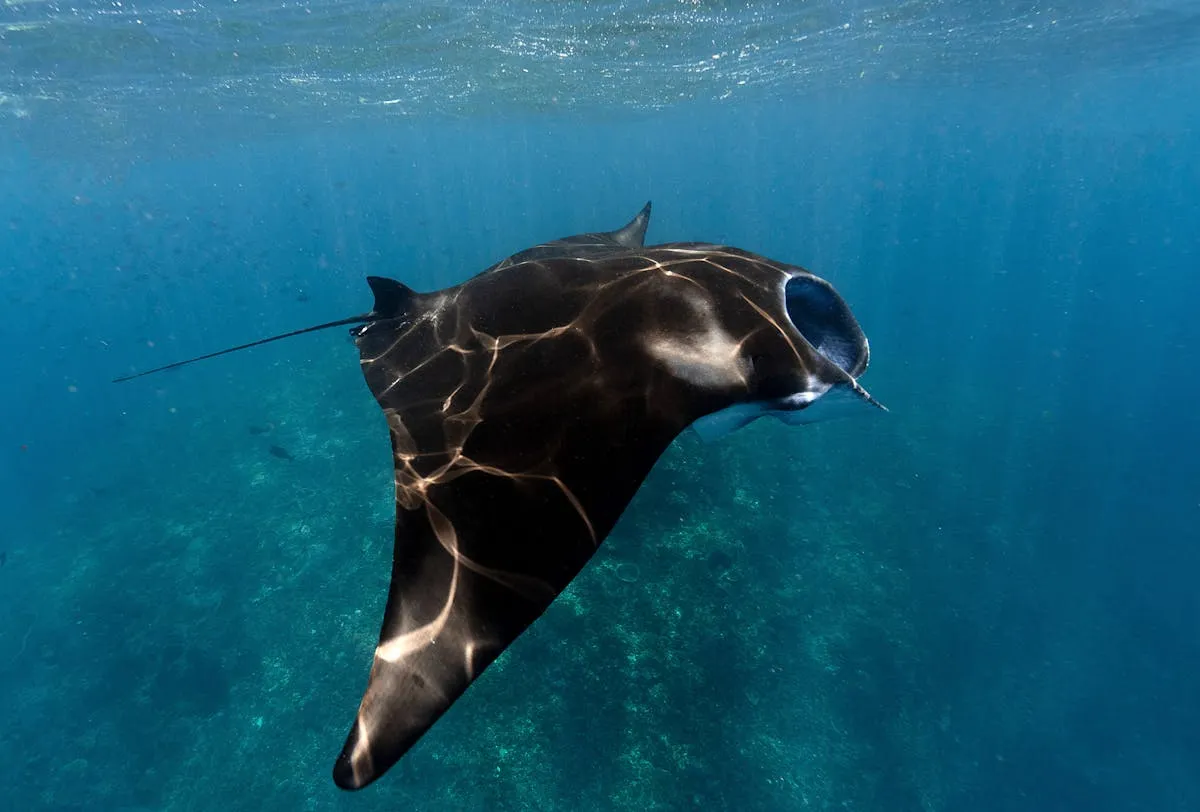
Two species are found here: the reef manta ray, which is the more commonly encountered, and the larger oceanic manta ray (Mobula birostris), which is occasionally seen at deeper sites. Both species are filter feeders, consuming vast quantities of zooplankton by swimming with their cephalic fins unfurled to guide water into their cavernous mouths.
Hanifaru Bay in Baa Atoll is arguably the most famous manta ray site in the world. This small, sheltered bay acts as a natural plankton trap: when tidal currents push plankton-rich water into the bay during the southwest monsoon (June to November), mantas gather in unusual numbers to feed. On the best days, dozens of mantas swirl together in a feeding vortex, barrel-rolling through the water in display.
Hanifaru Bay is a UNESCO Biosphere Reserve and a Marine Protected Area. Only snorkelling is permitted inside the bay (no scuba diving), and visitor numbers are strictly controlled. Entry requires a permit, and a ranger must be present. These measures help protect the mantas from disturbance during their critical feeding events.
Outside of the feeding season at Hanifaru Bay, the best way to see mantas is at cleaning stations. These are specific spots on the reef - usually a coral bommie or rocky outcrop - where small wrasse and other cleaner fish remove parasites and dead skin from visiting mantas. Mantas return to the same cleaning stations regularly, sometimes hovering in place for extended periods while the cleaners work.
Notable cleaning stations include:
Manta movements in the Maldives follow the monsoon-driven currents:
Mantas are intelligent, curious animals, but they are sensitive to disturbance. Following responsible viewing guidelines ensures that encounters remain positive for both mantas and people:
If you remain still and calm in the water, mantas will often approach you out of curiosity. Some of the most memorable encounters happen when you simply float and let them come to you.
The Maldives has been a leader in manta conservation. Mantas have been legally protected since 1995, and the Maldivian Manta Ray Project, run by the Manta Trust, has maintained a photo-ID database since 2005, tracking individual mantas by their unique belly patterns. This research informs conservation policy and helps identify critical habitats.
Tourism plays a vital role in manta conservation. Studies have shown that a single manta ray in the Maldives generates far more revenue alive, through snorkelling and diving tourism, than it would dead. This economic argument has been instrumental in securing ongoing protection for these animals. To learn more about the Maldives and its conservation efforts, visit our About section.