 Maldives Compass
Whale Sharks in the Maldives
Everything you need to know about whale sharks in the Maldives: South Ari Atoll encounters, best time to visit, responsible viewing guidelines, and conservation.
The Maldives is one of the world's premier destinations for shark encounters, from graceful reef sharks gliding across the shallows to hammerheads patrolling deep channels.
In 2010, the Maldives declared its entire exclusive economic zone a shark sanctuary, banning all shark fishing across nearly a million square kilometres of ocean. That decision made the Maldives one of the largest shark sanctuaries on Earth and has allowed populations to recover. Today, seeing sharks is one of the most exciting parts of any trip to the islands.
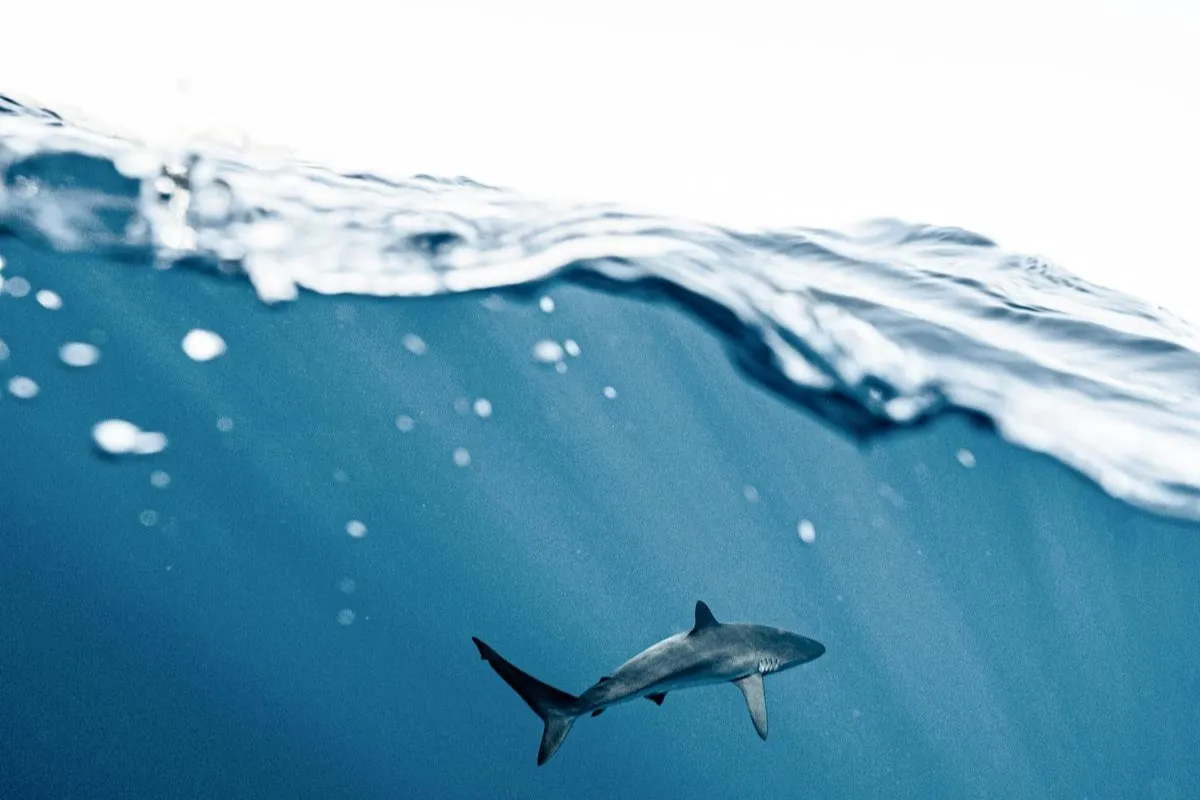
There is nothing to fear. The species found on Maldivian reefs are not aggressive toward humans and encounters are overwhelmingly peaceful. Sharks are essential apex predators that keep reef ecosystems in balance, and the Maldives is a rare place where you can appreciate their beauty and importance first-hand.
The blacktip reef shark is the species you are most likely to see, especially while snorkelling. Recognisable by the dark tips on their fins and a streamlined, pale-grey body, blacktips patrol shallow lagoons and reef flats, often in water barely a metre deep. They are typically between one and 1.5 metres long and are shy around people, usually keeping their distance or swimming away if approached.
Blacktip reef sharks are a common sight on house reefs, particularly at dawn and dusk when they hunt small fish. Watching them cruise just below the surface in crystal-clear water is one of those defining Maldives moments.
Whitetip reef sharks are the laid-back counterpart to the more active blacktip. During the day, whitetips can often be found resting on sandy patches under overhangs or inside caves. They are nocturnal hunters, so daytime encounters usually involve a still, sleeping shark - a striking sight for divers exploring reef crevices.
Whitetips are identified by the white tips on their dorsal and tail fins and a more slender, rounded snout than the blacktip. They are generally around 1.5 metres long and completely harmless to divers and snorkellers.
The grey reef shark is the star of Maldivian channel dives. Found in deeper water along atoll edges and kandu (channels), grey reef sharks are bigger and more powerful than their reef-dwelling cousins, growing up to two metres long. They are often seen in groups, gliding against the current at the mouth of a channel.
Some of the best grey reef shark encounters happen at dive sites in North and South Male Atoll, Vaavu Atoll, and Rasdhoo Atoll. These sharks are curious but not aggressive, and a respectful, calm approach is rewarded with extended close encounters.
Tawny nurse sharks are bottom-dwellers with a docile temperament and a distinctive appearance: broad, flat heads, barbels near the nostrils, and thick, muscular bodies that can reach three metres in length. They spend most of the day resting under coral ledges and become active at night to hunt crustaceans and small fish.
Nurse sharks are commonly seen on dive sites and house reefs throughout the Maldives. They are slow-moving and generally unbothered by the presence of divers, making them wonderful subjects for photography. As with all sharks, never touch or harass them.
For many divers, seeing a school of scalloped hammerhead sharks is the ultimate Maldives experience. Hammerheads are typically found in deeper water around the outer edges of atolls, and sightings often require early-morning dives to 30 metres or more.
Rasdhoo Atoll, particularly the site known as Hammerhead Point (Rasdhoo Madivaru), is the most famous location for hammerhead encounters. Vaavu Atoll and the southern atolls also produce reliable sightings during the northeast monsoon season (December to April). These are large, impressive animals that can exceed three metres, and watching a school pass overhead is memorable.
Beyond the species above, lucky visitors may also encounter:
Shark encounters in the Maldives are safe. No species commonly found on reefs poses a meaningful threat to humans, and unprovoked incidents are virtually unheard of. To ensure a positive experience for both you and the sharks:
Sharks are a sign of a healthy ocean, and seeing them should be celebrated. The Maldives' commitment to shark conservation means that these encounters will be available for generations of visitors to come. For more on underwater activities, visit our Things to Do guide.