 Maldives Compass
Manta Rays in the Maldives
Where and when to see manta rays in the Maldives, including Hanifaru Bay, cleaning stations, seasonal patterns, and responsible viewing guidelines.
The world's largest fish, gentle and , can be encountered year-round in the warm waters of the Maldives, with South Ari Atoll offering some of the most reliable sightings on the planet.
Whale sharks (Rhincodon typus) are the largest fish in the sea, reaching lengths of 12 metres or more and weighing up to 20 tonnes. Despite their enormous size, they are filter feeders, cruising through the water with their wide mouths open to strain plankton, fish eggs, and small fish from the ocean. They are completely harmless to humans and remarkably tolerant of snorkellers who approach respectfully.
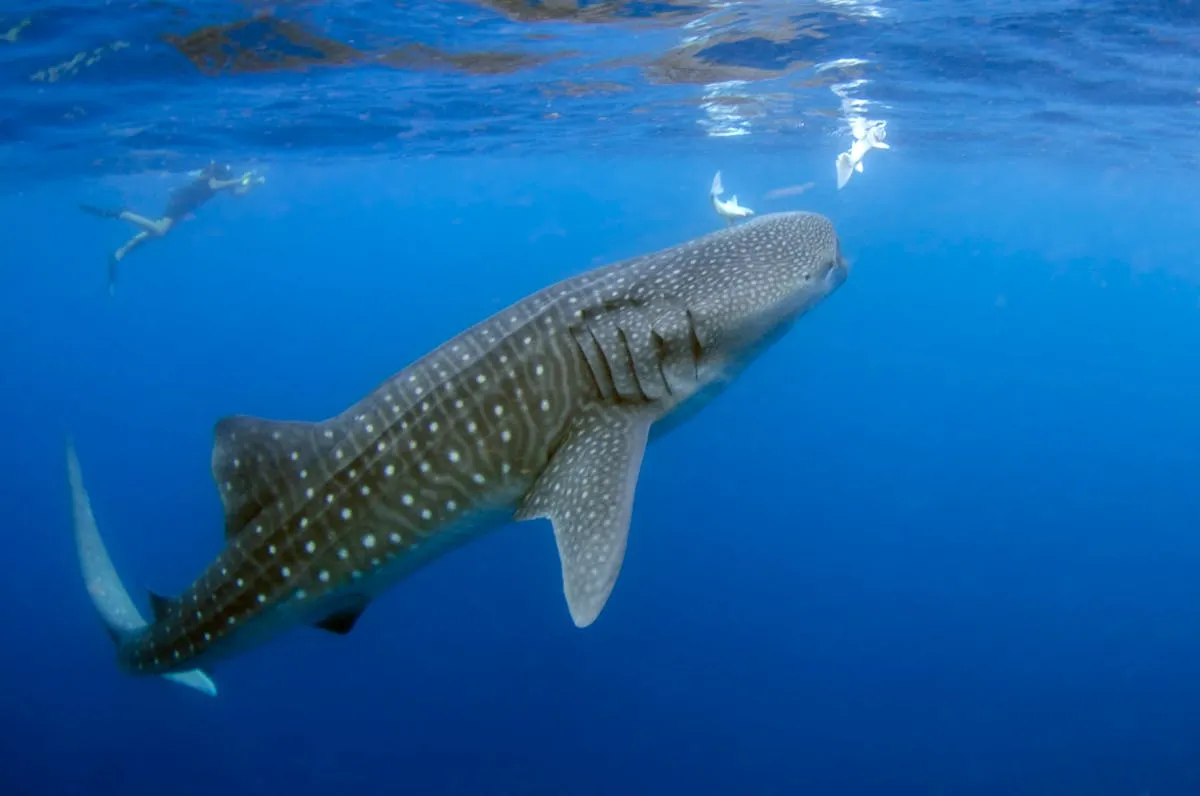
The Maldives is one of the few places in the world where whale shark sightings are consistent throughout the year, making it a bucket-list destination for anyone who wants to swim alongside these notable animals.
South Ari Atoll is the epicentre of whale shark activity in the Maldives. The outer reef edge on the western and southern sides of the atoll attracts juvenile whale sharks, typically between three and eight metres long, that feed on the plankton-rich waters flowing along the atoll rim. Researchers believe these young whale sharks use South Ari Atoll as a long-term feeding ground, with some individuals returning year after year.
The Maldives Whale Shark Research Programme (MWSRP) has been studying the South Ari population since 2006 and has identified hundreds of individual whale sharks using photo-ID based on each animal's unique spot pattern. Their research has shown that South Ari Atoll hosts one of the largest aggregations of juvenile whale sharks anywhere in the world.
Whale shark excursions from resorts and guesthouses in South Ari Atoll follow a well-established pattern:
Most excursions last a half-day and include multiple snorkelling stops. Even on quieter days, the coral reefs and fish life in South Ari Atoll are outstanding.
Whale sharks can be encountered year-round in South Ari Atoll, which is one of the site's greatest advantages. However, some periods offer higher encounter rates:
Weather conditions also play a role. Calm, clear days make it easier to spot whale sharks from the boat. Rough seas or heavy rain can reduce visibility and make sightings less likely.
While South Ari Atoll is the most reliable location, whale sharks are occasionally encountered elsewhere in the Maldives:
The Maldives has established a code of conduct for whale shark encounters that all operators are expected to follow. As a visitor, you play an important role in ensuring these guidelines are respected:
Choose operators who follow these rules strictly. Responsible operators brief guests before entering the water, limit group sizes, and prioritise the animal's wellbeing over getting the closest possible encounter. The MWSRP offers a certification programme for responsible operators.
Whale sharks are classified as Endangered on the IUCN Red List. In the Maldives, they are fully protected under law, and the broader shark sanctuary designation provides additional safeguards. The MWSRP's ongoing research has been instrumental in understanding the population dynamics of Maldivian whale sharks and advocating for stronger protections.
Tourism revenue is a powerful argument for conservation. Each whale shark in South Ari Atoll generates significant income for local communities through excursion fees, guesthouse bookings, and resort visits. By choosing to see whale sharks responsibly, you are directly supporting their protection. For more on marine experiences, see our Things to Do section, and learn more about the Maldives in our About guide.