 Maldives Compass
The One-Island-One-Resort Model
The Maldives operates on a resort model that is virtually unique in global tourism. In most countries, a resort is a hotel that happens to be in a nice location, surrounded by other hotels, restaurants, shops, and public infrastructure. In the Maldives, a resort is an entire island. The government leases uninhabited islands to resort operators, who then develop the island exclusively for their guests. There is no public access to resort islands, no neighbouring businesses, and no other accommodation. When you book a resort in the Maldives, you are booking your own island.
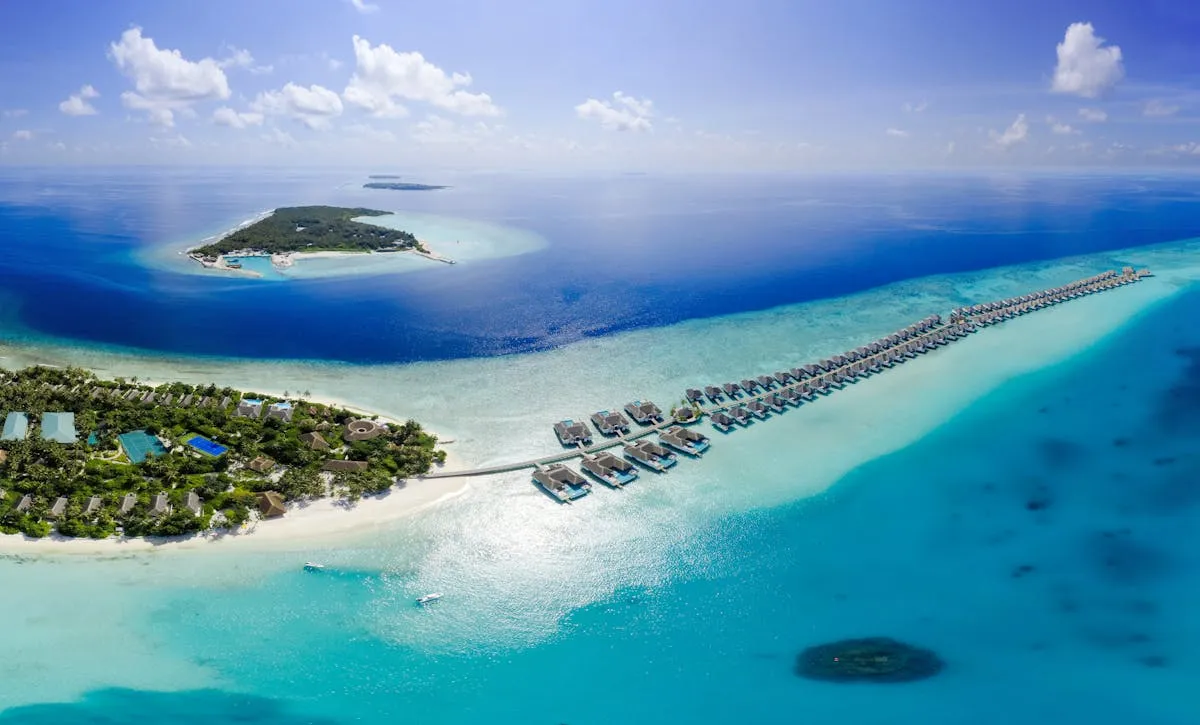
This model emerged in the 1970s when tourism first came to the Maldives. The government made a deliberate decision to keep resort tourism physically separate from the local inhabited islands, partly to protect Maldivian culture and Islamic values from the influence of mass tourism, and partly to create an exclusive, controlled product that could command premium prices. The policy has evolved since then, and guesthouses on inhabited islands are now permitted, but the one-island-one-resort model remains the dominant format and the defining feature of Maldivian tourism.
Meal Plans: All-Inclusive vs Half-Board
Because you are on an island with no external restaurants or shops, your meal plan is one of the most important decisions you will make when booking. Resorts typically offer several options. Bed and breakfast is the most basic, covering only your morning meal. Half-board includes breakfast and dinner, which is the most popular choice among visitors. Full-board covers all three meals. All-inclusive adds drinks, and sometimes snacks, selected excursions, and spa credits on top of full-board.
The choice matters more here than at a typical hotel because there is genuinely nowhere else to eat. If you book bed and breakfast, you will need to pay resort prices for every lunch and dinner, and those prices can be substantial. A simple lunch at a mid-range Maldivian resort might cost forty to seventy US dollars per person, and dinner can easily exceed a hundred. Drinks are similarly expensive, with cocktails often priced between fifteen and twenty-five dollars. For many guests, upgrading to all-inclusive provides peace of mind and can actually save money compared to paying for each item separately.
Getting There: Transfers from Male
Every journey to a Maldivian resort begins at Velana International Airport in Male. From there, the transfer to your resort depends on how far the island is from the capital. Resorts in the nearby North and South Male atolls are typically reached by speedboat, with journey times ranging from fifteen minutes to an hour. Resorts further afield require a seaplane transfer, which is one of the most iconic experiences of a Maldives holiday. The seaplanes are operated primarily by Trans Maldivian Airways and Maldivian Air Taxi, and they fly during daylight hours only, which means guests arriving on late evening flights must spend a night near the airport before continuing to their resort the next morning.
A smaller number of remote resorts are reached via domestic flights to a regional airport followed by a short speedboat ride. This is common for resorts in the far south of the archipelago, such as those in Addu Atoll or Huvadhoo Atoll. Transfer costs are significant and not always included in the room rate. A return seaplane transfer typically costs between four hundred and six hundred US dollars per person, while speedboat transfers range from one hundred to three hundred dollars. It is essential to factor these costs into your budget when comparing resort prices.
What Is Included at a Resort
Beyond your room and meal plan, most Maldivian resorts include a range of amenities and activities at no extra charge. Non-motorised water sports are almost universally complimentary, including kayaking, stand-up paddleboarding, windsurfing, and snorkelling equipment. The resort beach, swimming pool, fitness centre, and often a basic spa sauna or steam room are also included. Many resorts offer a daily schedule of free activities such as guided reef snorkelling tours, yoga sessions, coconut palm climbing demonstrations, and evening entertainment.
Activities that carry additional charges typically include scuba diving, motorised water sports such as jet skiing and parasailing, fishing excursions, dolphin cruises, spa treatments, and private dining experiences. Diving is one of the biggest additional expenses, with a single guided dive costing between seventy and one hundred and twenty dollars at most resorts. Some all-inclusive packages now bundle a set number of dives or excursions into the price, which can represent good value for active guests.
Staffing and Operations
Running a resort on a remote island requires a notable logistical operation. A typical mid-size Maldivian resort might have two hundred to four hundred rooms and employ six hundred to a thousand staff. These staff live on the island, usually in a dedicated back-of-house area that guests do not see. The staff quarters include dormitories, a staff canteen, recreational facilities, and sometimes a small mosque. Many staff are Maldivian, but resorts also employ significant numbers of workers from Sri Lanka, Bangladesh, India, and other countries to fill specialised roles.
Everything the resort needs must be brought in by boat. Food, fresh water, fuel, building materials, laundry supplies, and every other consumable arrives on regular supply boats from Male or other distribution centres. Most resorts operate their own desalination plants to produce fresh water from seawater, and generate electricity using diesel generators, though solar power is increasingly supplementing this. Waste management is a constant challenge, with most resorts operating incinerators, recycling facilities, and composting systems. The operational complexity of these island resorts is often invisible to guests, but it is an notable feat of logistics that keeps everything running smoothly in the middle of the ocean.
Booking Tips
When booking a Maldives resort, comparing total cost is essential. The room rate alone can be misleading because transfer costs, meal plan upgrades, and service charges can add substantially to the final bill. Most resorts charge a ten percent service charge and a twelve percent GST on top of listed prices. Reading recent guest reviews is particularly valuable for Maldivian resorts because the quality of the house reef, which is the snorkelling reef directly accessible from the island, varies enormously between properties and is often the single biggest factor in guest satisfaction. A resort with a colourful house reef can provide unlimited free entertainment, while one with a barren or damaged reef may leave snorkelling enthusiasts disappointed.