 Maldives Compass
Ramadan in the Maldives
A guide to experiencing Ramadan in the Maldives as a visitor, covering fasting traditions, iftar meals, adjusted services on local islands, and Eid celebrations.
Joyful traditions that bring island communities together in music, feasting, and shared devotion
Eid al-Fitr, known locally as Kuda Eid (meaning "small Eid"), marks the end of Ramadan and is one of the two most important celebrations in the Maldivian calendar. After a month of fasting, prayer, and reflection, the sighting of the new moon signals the beginning of three days of festivities that transform every island in the archipelago into a scene of communal joy.
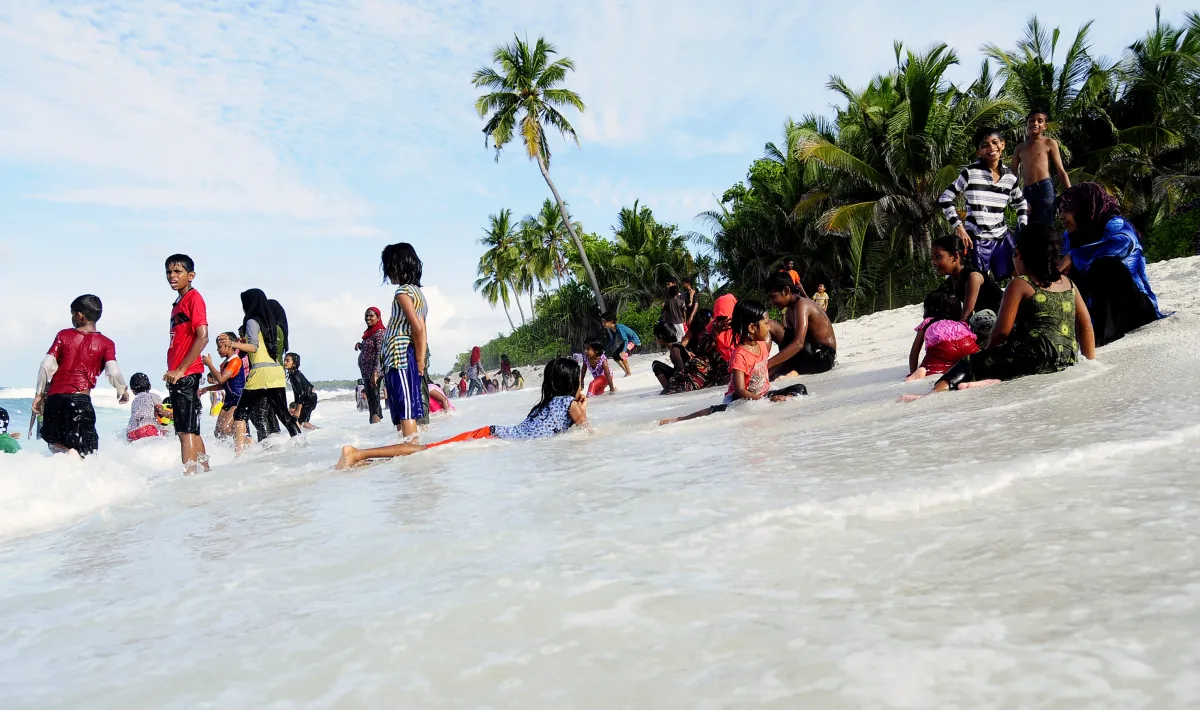
Preparations for Kuda Eid begin well before the final days of Ramadan. Homes are thoroughly cleaned and often freshly painted or redecorated. New clothes are purchased or made for every member of the family, and kitchens buzz with activity as families prepare elaborate spreads of food. Traditional hedhikaa and special sweets are made in large quantities, as households will receive a steady stream of visitors over the Eid period.
On the morning of Eid, the community gathers for special prayers, either at the mosque or in an open-air prayer ground. Men, women, and children dress in their finest clothes and greet one another with "Eid Mubarak." After prayers, the visiting begins. Families move from house to house, sharing food and good wishes. On small islands, it is customary to visit nearly every household, ensuring that the celebrations are truly communal. Children receive gifts and sweets, and the atmosphere is one of warmth and generosity.
Eid al-Adha, known as Bodu Eid (meaning "big Eid"), falls during the Islamic month of Dhul Hijjah and commemorates the willingness of Ibrahim (Abraham) to sacrifice his son in obedience to God. It is considered the more significant of the two Eid celebrations, though in the Maldives both are observed with equal enthusiasm. Bodu Eid coincides with the Hajj pilgrimage, and Maldivians who have made the journey to Mecca are honoured upon their return.
The sacrificial tradition is central to Bodu Eid. Families who can afford to do so sacrifice a goat or a cow, distributing the meat among family, neighbours, and those in need. On islands where livestock is not readily available, arrangements are made to bring animals from Male or from agricultural islands. The communal sharing of meat reinforces the Islamic values of generosity and care for the less fortunate, and ensures that every household participates in the feast.
The celebrations that follow the sacrifice mirror those of Kuda Eid: communal prayers, visiting between households, lavish meals, and entertainment. Bodu beru performances are a highlight of Bodu Eid on many islands, with drumming groups performing well into the night. Traditional games and sports, including football matches, tug-of-war, and swimming races, add to the festive atmosphere. The celebrations can extend for several days, particularly on islands where the entire community participates.
The Maldives observes several secular national holidays that commemorate key events in its history. National Day, celebrated on the first day of Rabi ul-Awwal in the Islamic calendar, honours Muhammad Thakurufaanu's liberation of the Maldives from Portuguese occupation in 1573. The day is marked with official ceremonies, flag-raising, parades, and cultural performances in Male, while islands across the country hold their own observances.
Independence Day on 26 July celebrates the Maldives' independence from Britain in 1965. Republic Day on 11 November marks the establishment of the republic in 1968. Both days are public holidays marked by official speeches, cultural programmes, and community gatherings. While these secular holidays are observed with less personal fervour than the Eid celebrations, they serve as important occasions for national reflection and pride.
In recent years, these national holidays have also become occasions for cultural showcases, with traditional arts and crafts exhibitions, cooking demonstrations featuring traditional foods, and performances of traditional music and dance. These events play an important role in keeping cultural traditions alive, particularly among younger generations who might otherwise have limited exposure to them.
No Maldivian festival is complete without bodu beru, the traditional drumming and dancing that is the most distinctive performing art of the archipelago. Bodu beru, which literally means "big drum," involves a group of drummers playing coconut-wood drums with increasing tempo, accompanied by singing and dancing. The performance typically begins slowly and builds to a frenetic climax, with dancers entering a trance-like state.
During festival seasons, bodu beru groups perform on beaches, in community squares, and at specially arranged events. Each island often has its own bodu beru group, and inter-island performances and competitions add an element of friendly rivalry to the festivities. The songs performed during bodu beru can be traditional compositions passed down through generations or newly written pieces that address contemporary themes.
Other forms of festival entertainment include traditional games, storytelling, and theatrical performances. On some islands, particularly in the southern atolls, traditional dances distinct from bodu beru are performed during festivals, reflecting the regional variations in Maldivian culture. Modern entertainment, including concerts, DJs, and film screenings, has also become part of the festival mix, particularly in Male and on more urbanised islands.
While the core religious observances of Eid are consistent throughout the Maldives, the social customs and entertainment that surround them vary considerably from atoll to atoll. Northern atolls may have different traditional games or culinary specialities than southern ones, and the style of bodu beru performance can differ noticeably between regions. These variations reflect the historical isolation of different atoll communities, which allowed distinct local traditions to develop.
In some southern atolls, festivals include traditional processions and rituals that incorporate pre-Islamic elements, echoing customs that predate the conversion to Islam in 1153 CE. In the northern atolls, the influence of South Asian cultural traditions is sometimes more apparent in the foods prepared and the styles of celebration. These regional differences are a source of local pride and contribute to the rich diversity of Maldivian cultural life.
Visitors who happen to be on a local island during a festival period are often warmly invited to participate in the celebrations. This hospitality is a hallmark of Maldivian community life, and joining in a local Eid celebration or attending a bodu beru performance is one of the most authentic cultural experiences available to travellers in the Maldives. Being aware of local etiquette, particularly regarding modest dress and respectful behaviour, will ensure a positive experience for both visitors and hosts.
Beyond the major religious and national holidays, Maldivian communities celebrate a variety of local events. Weddings are perhaps the most elaborate of these, involving multiple days of feasting, music, and celebration that engage the entire island. Traditional wedding customs, including the decoration of the bride's home, the exchange of gifts, and the communal preparation of special foods, vary from island to island but always reflect the communal nature of Maldivian society.
The completion of a child's recitation of the entire Quran, known as a khatam, is another occasion for celebration. The child's family hosts a feast for the community, and the achievement is recognised as a significant milestone in the child's education and spiritual development. Other community celebrations include the launching of new boats, the opening of community facilities, and gatherings to mark the return of pilgrims from Hajj.
These celebrations, both large and small, are the threads that weave Maldivian island communities together. In a nation of scattered islands, where distances can be great and resources limited, the tradition of celebrating together provides social cohesion and a shared sense of identity that transcends geography.