 Maldives Compass
Popular Maldivian Dishes
A guide to popular Maldivian dishes - from mas huni and garudhiya to fish curries, rihaakuru, and bis keemiya. Discover the meals that define everyday eating in the Maldives.
A cuisine built on tuna, coconut, and centuries of island resourcefulness - shaped by the sea and spiced by the trade winds.
The Maldives is a nation of over 1,200 coral islands, none of which rises more than a couple of metres above sea level. There are no rivers, very little arable land, and almost no livestock farming. These constraints have produced a cuisine that is remarkably focused: the ocean provides the protein, the coconut palm provides the fat and sweetness, and a handful of aromatics and imported staples fill in the rest.
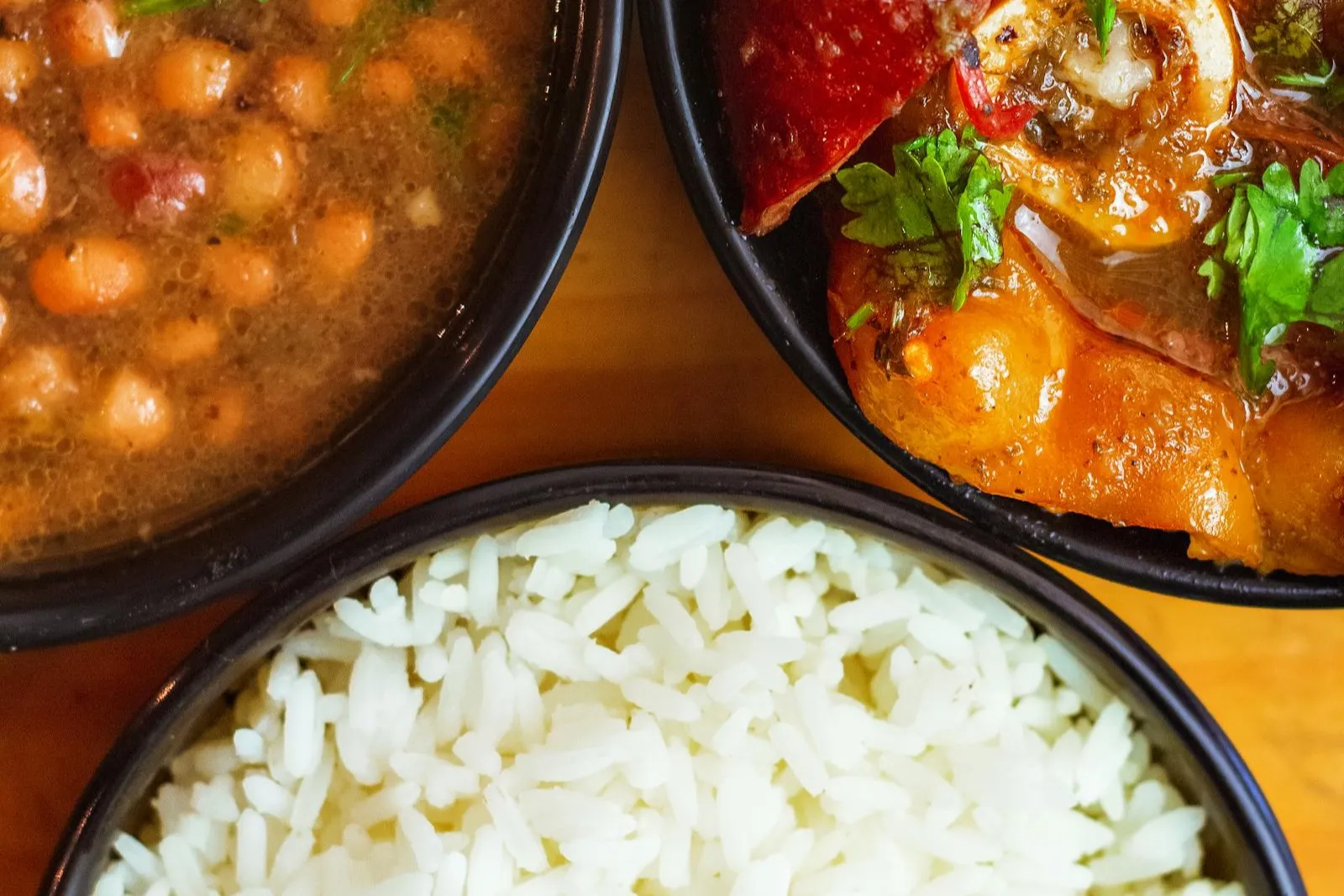
The result is food that is simple in its ingredient list but rich in technique and flavour. Maldivians have developed ingenious ways to preserve fish, extract every useful part of the coconut, and turn a short pantry into a surprisingly varied menu of curries, salads, soups, snacks, and sweets.
Skipjack tuna - known locally as kandu mas - is the foundation of Maldivian cooking. It appears at nearly every meal in one form or another: fresh, dried, smoked, flaked, curried, or simmered into broth. The Maldivian method of processing tuna into Maldive fish (a hard, dry, smoked product) is ancient and distinctive. Pieces of skipjack are boiled, smoked over coconut wood, and sun-dried until they become rock-hard sticks that can be stored for months. This preserved fish is grated or shaved into dishes the way other cuisines might use a stock cube or parmesan - adding a deep, savoury umami to everything it touches.
Fishing, particularly pole-and-line tuna fishing, is not just a food source but a cornerstone of Maldivian cultural identity. The traditional fishing boat, the dhoni, remains a symbol of the nation.
The coconut palm is sometimes called the "tree of life" in the Maldives, and for good reason. Freshly grated coconut appears in breakfast dishes like mas huni. Coconut milk and cream form the base of most curries. Coconut oil is the primary cooking fat. Toddy tapped from the palm's flower is fermented into raa, and the leaves, wood, and shell find uses far beyond the kitchen. In Maldivian cooking, it is nearly impossible to prepare a meal that does not involve the coconut in some form.
Rice is the staple carbohydrate, imported for centuries from Sri Lanka and India. It is served steamed alongside curries and garudhiya, and rice flour is used in flatbreads, pancakes, and a variety of short eats and sweets. Roshi, the unleavened flatbread made from wheat or rice flour and cooked on a flat griddle, is equally important and accompanies many meals.
Beyond the core trio, Maldivian cooks rely on a consistent set of aromatics and flavourings:
Traditional Maldivian cooking is done over wood fires, often using coconut wood and husks as fuel. Dishes tend to be either slow-simmered (curries, broths) or quickly deep-fried (snacks). There is very little baking in the traditional repertoire - the flat griddle for roshi and the frying pan for hedhikaa are the primary tools alongside the cooking pot.
Meals are typically served communally. A standard Maldivian meal might include steamed rice, a fish curry, a clear fish soup like garudhiya, a side of chili paste (lonumirus), some lime, and perhaps a salad or vegetable dish. Everything comes to the table at once, and diners mix and match as they like.
The Maldives sits at a crossroads of Indian Ocean trade routes, and its cuisine reflects centuries of cultural exchange:
Understanding these influences adds depth to the experience of eating in the Maldives. The cuisine is not a copy of any single tradition but a distinct island adaptation - lean, flavourful, and built around the rhythms of everyday island life.