 Maldives Compass
A Nation Built on Living Reef
The Maldives is, quite literally, a country made of coral. Every grain of sand on every beach was once part of a living reef organism. The 26 atolls that make up the archipelago are the exposed rims of ancient coral structures rising from the deep floor of the Indian Ocean, and the reefs that fringe each island today are the ongoing construction crews - billions of tiny polyps secreting calcium carbonate skeletons that slowly, generation after generation, build the land itself.
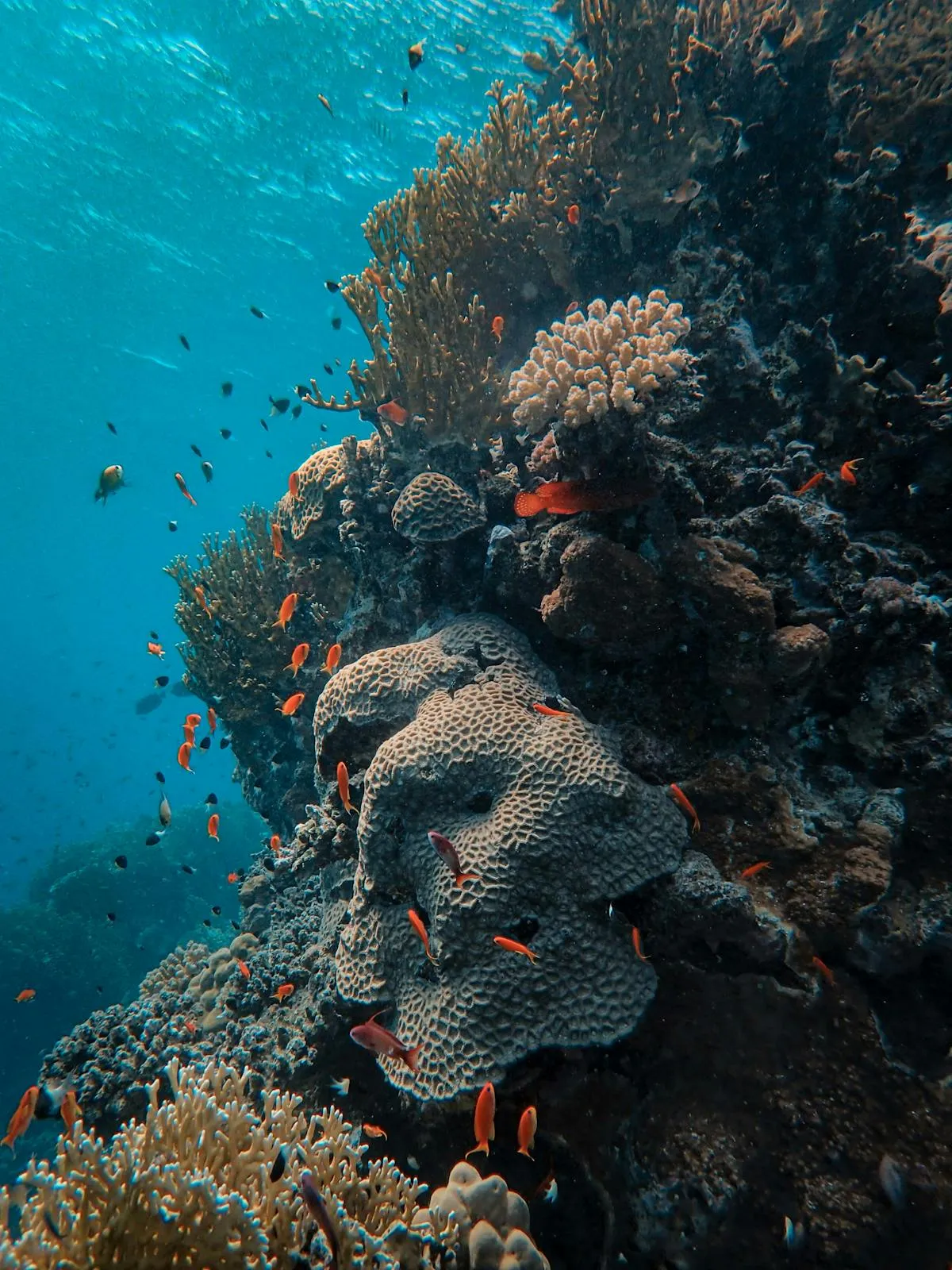
Covering roughly 8,920 square kilometres of reef area, the Maldivian reef system is one of the most extensive in the Indian Ocean. It supports an estimated 1,100 species of fish, over 180 species of hard coral, and countless invertebrates, making it one of the richest marine environments on Earth relative to its land area. For visitors, understanding how these ecosystems function transforms a simple snorkelling trip into a window on one of nature's most complex and beautiful systems.
Reef Zones: From Shore to Deep Blue
A Maldivian reef is not a single uniform structure. It is divided into distinct zones, each with its own physical conditions, coral communities, and resident species. Learning to recognise these zones helps you navigate underwater and know where to look for specific marine life.
The reef flat is the shallowest zone, often exposed or barely submerged at low tide. It stretches from the shoreline outward and is dominated by hardy coral species that can tolerate intense sunlight, temperature fluctuations, and occasional air exposure. You will find small damselfish, juvenile wrasse, and sea cucumbers here. The substrate is often a mix of rubble, sand, and encrusting corals.
Beyond the reef flat lies the reef crest, the highest point of the reef structure where waves break. This is a high-energy zone battered by surge, and the corals here tend to be robust, encrusting forms or stout branching species. Despite the turbulence, it is extremely productive because the constant water movement delivers oxygen and nutrients. Surgeonfish and parrotfish graze algae from the crest in large schools.
The reef slope descends from the crest into deeper water, often at a steep angle. This is where biodiversity peaks. Massive table corals, delicate branching Acropora, and soft corals compete for space. Reef sharks patrol the slope, moray eels hide in crevices, and clouds of anthias hover above coral heads. The slope may drop to 30 metres or more before transitioning to sandy bottom or the deep channel between atolls.
Many Maldivian atolls also feature thilas - submerged pinnacles that rise from the atoll floor without reaching the surface. These underwater mountains concentrate marine life and are among the most spectacular dive sites in the country.
Symbiosis: Partnerships That Power the Reef
Reef ecosystems run on cooperation. The most fundamental partnership is between coral polyps and the microscopic algae called zooxanthellae that live within their tissues. The algae photosynthesize, converting sunlight into sugars that provide up to 90 percent of the coral's energy needs. In return, the coral provides shelter and access to nutrients. This relationship is what allows corals to build massive limestone structures in nutrient-poor tropical waters - and it is also what makes reefs vulnerable to coral bleaching when water temperatures rise.
Cleaning stations are another vivid example of symbiosis. Small wrasse and cleaner shrimp set up stations on prominent coral heads, and larger fish - including manta rays, groupers, and reef sharks - queue up to have parasites removed from their skin, gills, and even inside their mouths. The cleaners get a meal; the clients get healthcare. These stations are predictable gathering points, making them excellent spots for snorkellers and divers.
Clownfish and anemones are perhaps the most famous reef partnership. The clownfish gains protection among the anemone's stinging tentacles, while the anemone benefits from the fish's waste nutrients and its aggressive defence against butterflyfish that would otherwise nibble the anemone's tentacles. In the Maldives, you can find the Maldivian clownfish (Amphiprion nigripes), a species endemic to the central Indian Ocean.
Food Chains and Energy Flow
Energy enters the reef primarily through photosynthesis - by zooxanthellae inside corals, by turf algae coating every available surface, and by phytoplankton drifting in the water column. This primary production supports an enormous pyramid of consumers.
Herbivores like parrotfish, surgeonfish, and sea urchins graze algae, preventing it from overgrowing and smothering corals. Parrotfish also bite chunks of coral skeleton to reach the algae inside, grinding it in their pharyngeal jaws and excreting fine white sand - a single parrotfish can produce hundreds of kilograms of sand per year, directly creating the beaches the Maldives is famous for.
Small predators - wrasse, hawkfish, octopus, and moray eels - feed on invertebrates and small fish. They are in turn preyed upon by larger groupers, jacks, and reef sharks. At the top of the chain, apex predators like grey reef sharks and whale sharks (which filter plankton) help regulate populations and keep the ecosystem in balance.
Nutrient recycling is remarkably efficient. Sponges filter bacteria from the water. Sea cucumbers process detritus on the sand. Giant clams filter plankton while also hosting their own zooxanthellae. Every organism plays a role, and the loss of any key group can cascade through the system.
Biodiversity Hotspots Within the Atolls
While the entire Maldivian reef system is biodiverse, certain habitats stand out. Channel entrances (kandu) where currents flush nutrients into the atoll interior are magnets for pelagic species. Thilas and giris (smaller submerged reefs) in the middle of atoll lagoons often harbour dense concentrations of soft corals and sea fans. Seagrass meadows on sandy lagoon floors support green sea turtles and juvenile fish. Even the seemingly barren sandy flats host garden eels, stingrays, and burrowing gobies.
The Maldives sits at a biogeographic crossroads, receiving species from the western Indian Ocean, the Arabian Sea, and Southeast Asia. This mixing of fauna contributes to the archipelago's impressive species counts and means that a single dive can reveal an astonishing variety of life forms.
Threats and the Future
Maldivian reef ecosystems face serious pressures. Rising sea temperatures cause mass bleaching events, ocean acidification weakens coral skeletons, and localised stressors like coastal development, plastic pollution, and overfishing compound the damage. The 1998 and 2016 bleaching events killed large percentages of shallow coral across the archipelago.
However, Maldivian reefs have also shown impressive resilience. Many reefs have recovered substantially between bleaching events, and active conservation programmes - including marine protected areas, coral nurseries, and sustainable tourism practices - are helping to give reefs the best possible chance. As a visitor, choosing responsible operators, avoiding contact with corals, and supporting conservation initiatives all contribute to the survival of these unusual ecosystems.