 Maldives Compass
A World of Colour Beneath the Surface
The Maldives is home to over 1,000 species of reef fish, and on any given snorkel or dive you might encounter dozens of species in a single session. The reefs here are alive with colour and movement - clouds of tiny damselfish hovering above branching corals, pairs of butterflyfish drifting along the reef wall, parrotfish crunching away at dead coral, and surgeonfish grazing in loose shoals across the reef flat. For anyone who loves the underwater world, the sheer abundance and variety of reef fish in the Maldives is one of its greatest attractions.
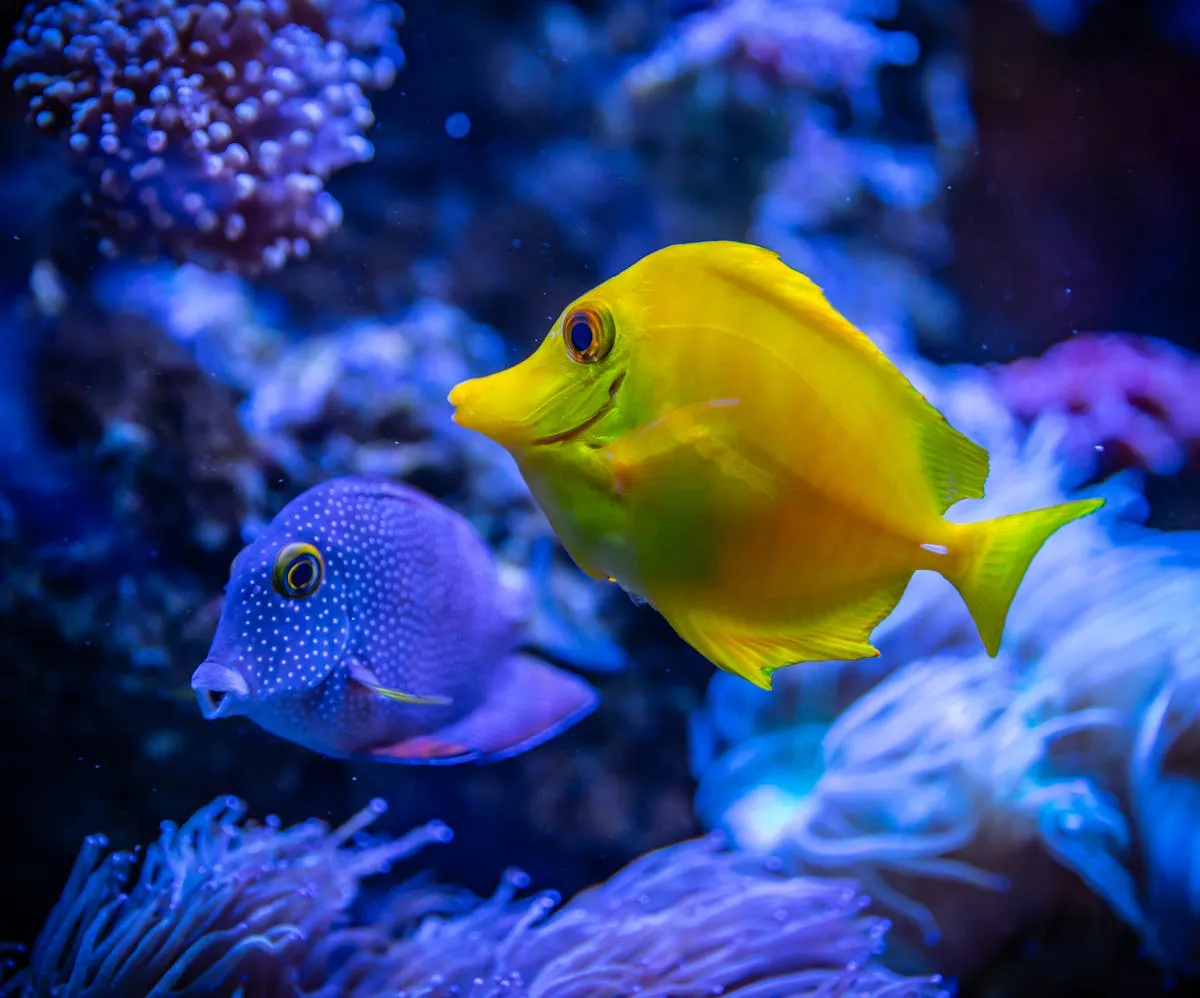
You do not need to be an expert to enjoy Maldivian reef fish. Many species are large, brightly coloured, and entirely unconcerned by the presence of snorkellers and divers. A simple mask and snorkel on a house reef will reveal more fish diversity than most aquariums can offer, and even seasoned tropical fish enthusiasts will find species here that they have never seen before.
Butterflyfish
Butterflyfish are among the most recognisable and photogenic fish on Maldivian reefs. These disc-shaped, laterally compressed fish come in a dazzling array of colours and patterns - bright yellows, stark blacks and whites, and intricate stripes and eyespots. The Maldives hosts around 30 species of butterflyfish, with common ones including the raccoon butterflyfish, the oriental butterflyfish, and the striking Maldivian endemic collared butterflyfish.
Most butterflyfish are seen in pairs, as they form long-term monogamous bonds and patrol a defined territory together. They feed on coral polyps, small invertebrates, and algae, and their presence is often taken as an indicator of reef health - healthy reefs with abundant live coral support more butterflyfish species and individuals. Watch them closely and you will see their tiny mouths picking delicately at the coral surface, extracting individual polyps with surgical precision.
Angelfish
Closely related to butterflyfish but generally larger and more robust, angelfish are another highlight of Maldivian reefs. The emperor angelfish, with its bold blue and yellow stripes, is perhaps the most iconic, but the regal angelfish (blue, orange, and white stripes) and the blue-faced angelfish are equally beautiful. Juvenile angelfish often look completely different from adults, sporting patterns of concentric circles or stripes that gradually transform as the fish matures.
Angelfish tend to be somewhat more shy than butterflyfish, often retreating into overhangs or crevices when approached too quickly. Patience rewards the observer - settle quietly near a section of reef and angelfish will gradually emerge and resume their normal behaviour, giving you the chance to admire their colouration up close.
Parrotfish
Parrotfish are the heavy lifters of the reef ecosystem, and they are impossible to miss on Maldivian reefs. Named for their fused teeth that form a beak-like structure, parrotfish spend their days biting off chunks of dead coral and algae-covered rock, grinding it up with pharyngeal teeth in their throats, digesting the organic material, and excreting the rest as fine white sand. A single large parrotfish can produce hundreds of kilograms of sand per year - much of the white sand that makes Maldivian beaches famous has, at some point, passed through a parrotfish.
The Maldives hosts numerous parrotfish species, from the massive bumphead parrotfish (which can reach over a metre in length and travel in impressive schools) to smaller, more colourful species like the bicolour parrotfish and the bullethead parrotfish. Males are often brilliantly coloured in greens, blues, and pinks, while females tend to be more subdued in brown or reddish tones. The crunching sound of parrotfish feeding is one of the characteristic soundscapes of a healthy reef.
Surgeonfish and Tangs
Surgeonfish - named for the scalpel-like spines at the base of their tails - are among the most abundant fish on Maldivian reefs. The powder blue surgeonfish, with its vivid sky-blue body and yellow dorsal fin, is one of the Maldives' signature species, often seen in large aggregations that sweep across the reef flat like a blue wave. Other common species include the yellowfin surgeonfish, the lined surgeonfish, and the sohal surgeonfish.
These fish are herbivores, grazing on algae that grows on the reef surface. Their role is critical: by keeping algae in check, surgeonfish prevent it from smothering living coral. Without herbivorous fish like surgeonfish and parrotfish, algae would quickly overgrow the reef and suffocate the coral colonies that form its structural foundation.
Triggerfish
Triggerfish are among the most charismatic - and occasionally the most territorial - fish on the reef. The titan triggerfish, the largest species in the Maldives, is particularly noteworthy. These powerful, heavy-bodied fish have strong jaws capable of crushing sea urchins and crustaceans, and during nesting season (typically around October and November), females fiercely defend their nest sites against anything that comes too close, including divers. A titan triggerfish guarding a nest will charge at intruders, and their bites, while not dangerous, are surprisingly powerful and unpleasant.
Other triggerfish species in the Maldives are more docile. The clown triggerfish, with its bold black body covered in large white spots and yellow-lipped mouth, is one of the most photographed fish on the reef. The orange-lined triggerfish and the Picasso triggerfish (also known as the lagoon triggerfish) are frequently encountered in shallow areas and make excellent subjects for underwater photography.
Wrasses, Gobies, and Damselfish
Wrasses form one of the largest and most diverse fish families on Maldivian reefs. From the tiny cleaner wrasse - which sets up cleaning stations where larger fish queue to have parasites removed - to the enormous Napoleon wrasse (also called the humphead wrasse), which can grow to over two metres, this family covers an astonishing range of sizes, colours, and behaviours. Cleaner wrasses are particularly fun to watch; they perform a distinctive bobbing dance to advertise their services, and even large predators like groupers and moray eels will sit patiently with their mouths open while the tiny wrasse picks parasites from their gills and teeth.
Gobies are small, often overlooked fish that are incredibly abundant on Maldivian reefs. Many species live in symbiotic relationships with pistol shrimps, sharing a burrow in the sand - the shrimp does the digging while the goby keeps watch for predators. Damselfish, meanwhile, are the feisty little guardians of the reef. Despite their small size, they aggressively defend patches of algae that they cultivate as food gardens, and they will not hesitate to nip at a snorkeller's fingers if they feel their territory is being invaded.
Their Role in the Reef Ecosystem
Every reef fish species plays a specific role in maintaining the health and balance of the reef ecosystem. Herbivores like parrotfish and surgeonfish control algae growth. Cleaners like wrasses remove parasites from other fish. Predators like groupers and jacks keep prey populations in check. Corallivores like butterflyfish help shape coral community structure. Even the smallest damselfish contributes by defending its algae garden and providing food for larger predators.
This intricate web of relationships means that the loss of any single group can have cascading effects. Overfishing of herbivores, for example, can lead to algae blooms that smother coral. The Maldives' marine protection measures help maintain these populations, and the reefs here remain among the most colourful and fish-rich in the Indian Ocean.
Best Places to See Reef Fish
The good news is that you can see spectacular reef fish almost anywhere in the Maldives. Any healthy house reef will deliver a wonderful experience, and many resort islands have reefs that are accessible directly from the beach or water villa. For the widest variety, try snorkelling along reef edges where the flat meets the slope - this transition zone attracts the greatest diversity of species.
Divers will find that deeper reef slopes and overhangs harbour species not typically seen while snorkelling, including some of the larger angelfish, rare wrasse species, and the shyer members of the butterflyfish family. Thilas - submerged pinnacles that rise from the atoll floor - are particularly rich, as they concentrate fish life around a relatively small structure. Channel dives add the excitement of pelagic species like barracuda and trevally alongside the resident reef fish.
From your first snorkel to your thousandth dive, the reef fish here never get old. Their colours, behaviours, and sheer numbers are a constant reminder of why these reefs are among the most valued marine environments on Earth.